Anonymous chat rooms can protect message content through encryption and minimize identity data, but they rarely protect participation metadata or prevent endpoint compromise. The practical limit is clear: even a service attracting approximately 73 million visitors per month in 2023, as reported in BBC coverage of Omegle's shutdown, can't make every participant invisible.
That apparent contradiction defines anonymous chat rooms online. They can remove accounts, phone numbers, and persistent profiles from the conversation, yet still expose timing, network-layer information, screenshots, browser characteristics, or the fact that two people communicated. Treat anonymity as a spectrum of engineering properties, not as a binary promise.
What Anonymous Chat Rooms Actually Protect
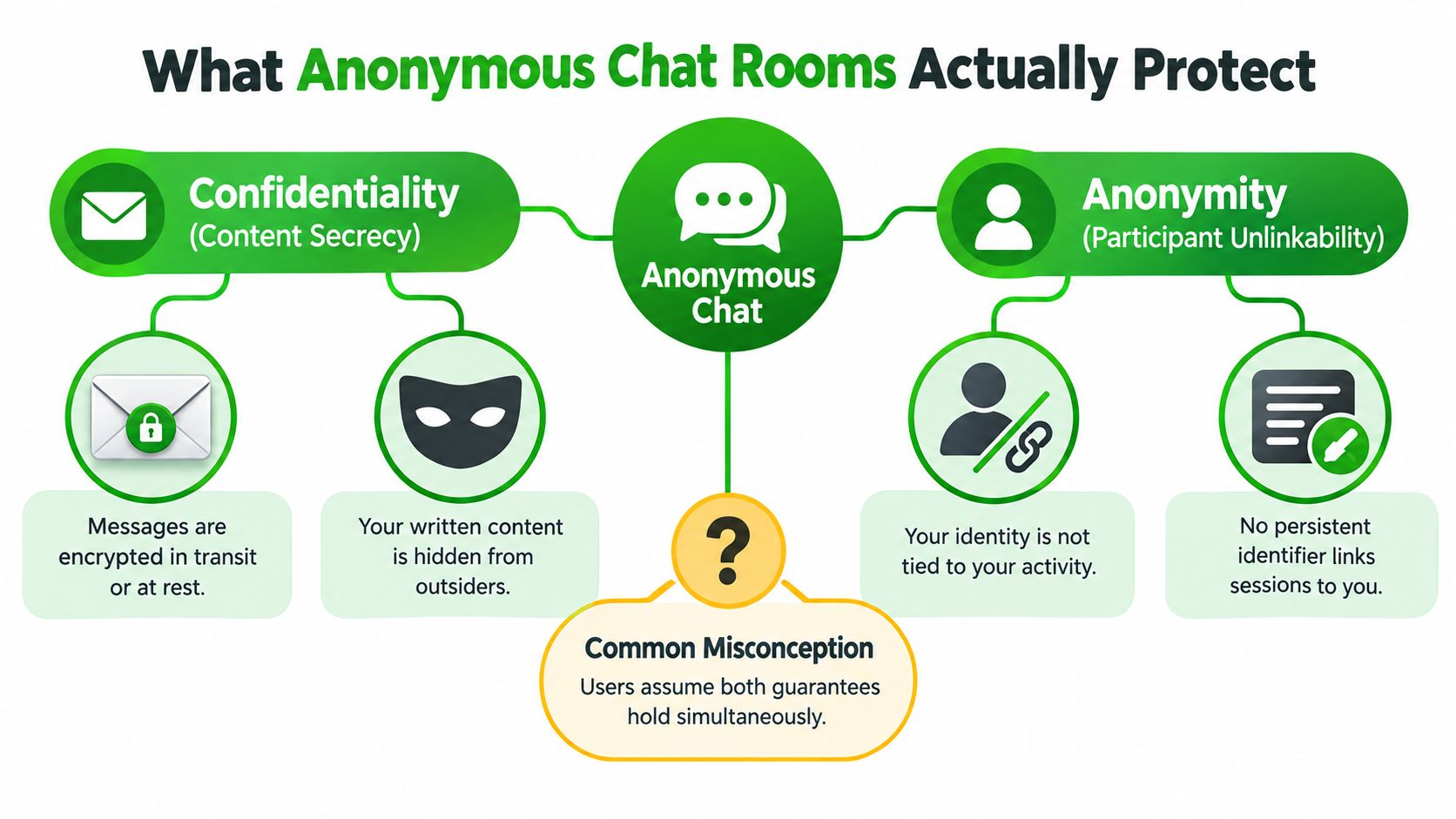
The first distinction is between confidentiality and anonymity. Confidentiality asks whether an outsider can read the message. Anonymity asks whether someone can connect the message or session to a real person. End-to-end encryption can provide strong content secrecy while leaving participation patterns visible.
A chat relay may receive encrypted payloads that it can't decrypt, but it can still observe operational details such as connection timing, message delivery, room participation, and network identifiers. The Electronic Frontier Foundation's explanation of encryption makes this boundary important: encryption protects content, but it doesn't automatically conceal metadata.
Four layers to evaluate
Think about an anonymous room as four separate layers:
- Identity data: Does the service require an account, email address, phone number, or persistent profile?
- Message content: Are messages encrypted before they reach the server, and does the server hold decryption keys?
- Server metadata: Does the relay retain room membership, timestamps, access events, IP data, or message history?
- Network-observable metadata: Can an internet provider, infrastructure operator, compromised browser, or traffic observer infer participation?
A service deserves the anonymous label only in a limited sense when it removes direct identity requirements and minimizes linkable records. That doesn't mean it provides complete invisibility. The distinction is also why understanding what metadata means matters before choosing a room.
The strongest design combines no persistent account, client-side encryption, minimal relay storage, short retention, and a clear warning about endpoints. A screenshot survives deletion. A compromised device can reveal plaintext before encryption. An infrastructure provider may still see a connection. Ephemeral deletion reduces later exposure, but it can't erase copies already captured elsewhere.
How Anonymous Chat Rooms Evolved and Operate
Anonymous chat isn't a recent messaging trend. By the late 1990s and 2000s, online chat rooms had become a major social format, often letting participants communicate through nicknames or without formal identity verification. A foundational UCLA study published in 2004 analyzed adolescent chat-room use and examined an 815-line conversation sample collected over 30 minutes in a monitored teen chat room, as documented in the published study.
That early format changed the social cost of joining a conversation. A person didn't need to establish a public profile before speaking. The room itself supplied the immediate context, while anonymity enabled experimentation, disclosure, and social exploration that could feel harder face to face.
Research later examined how the design affected live interaction. A 2021 study recruited 12,002 U.S. participants and recorded 11,268 messages across 346 chat rooms, produced by 703 active participants, with the reported message averages and median described in the same research record. The result is a useful reminder that anonymous chat is a studied communication environment, not merely a feature added to modern apps.
Omegle made the model mass-market
Omegle launched in March 2009 as a service that randomly paired users without registration. It added video functionality in March 2010, moving anonymous contact from text into live audiovisual interaction. During the COVID-19 lockdown period in 2020, usage rose substantially, and the platform shut down in November 2023 after operating for roughly 14 years, amid sustained safety and abuse concerns described by the BBC.
The scale was global. The largest visitor markets included India, the United States, the United Kingdom, Mexico, and Australia, showing that identity-light communication had international reach. The same low-friction design that encouraged participation also made moderation, age assurance, abuse reporting, and safeguarding harder to manage.
What a modern room does behind the interface
A privacy-focused browser room usually follows a simple flow:
- The browser creates a room and generates an access credential.
- Participants receive the credential through a separate channel.
- Each client encrypts messages before sending them to the relay.
- The relay forwards opaque ciphertext rather than readable content.
- The room expires or is manually destroyed according to its retention policy.
This architecture reduces onboarding friction, but convenience creates risk. Anyone who obtains the room credential may attempt to join, and a one-click interface can encourage users to mistake easy access for strong protection. Serverless designs may reduce stored information, while minimal-relay designs still need careful handling of routing, expiry, abuse controls, and metadata.
Privacy and Security Risks of Anonymity
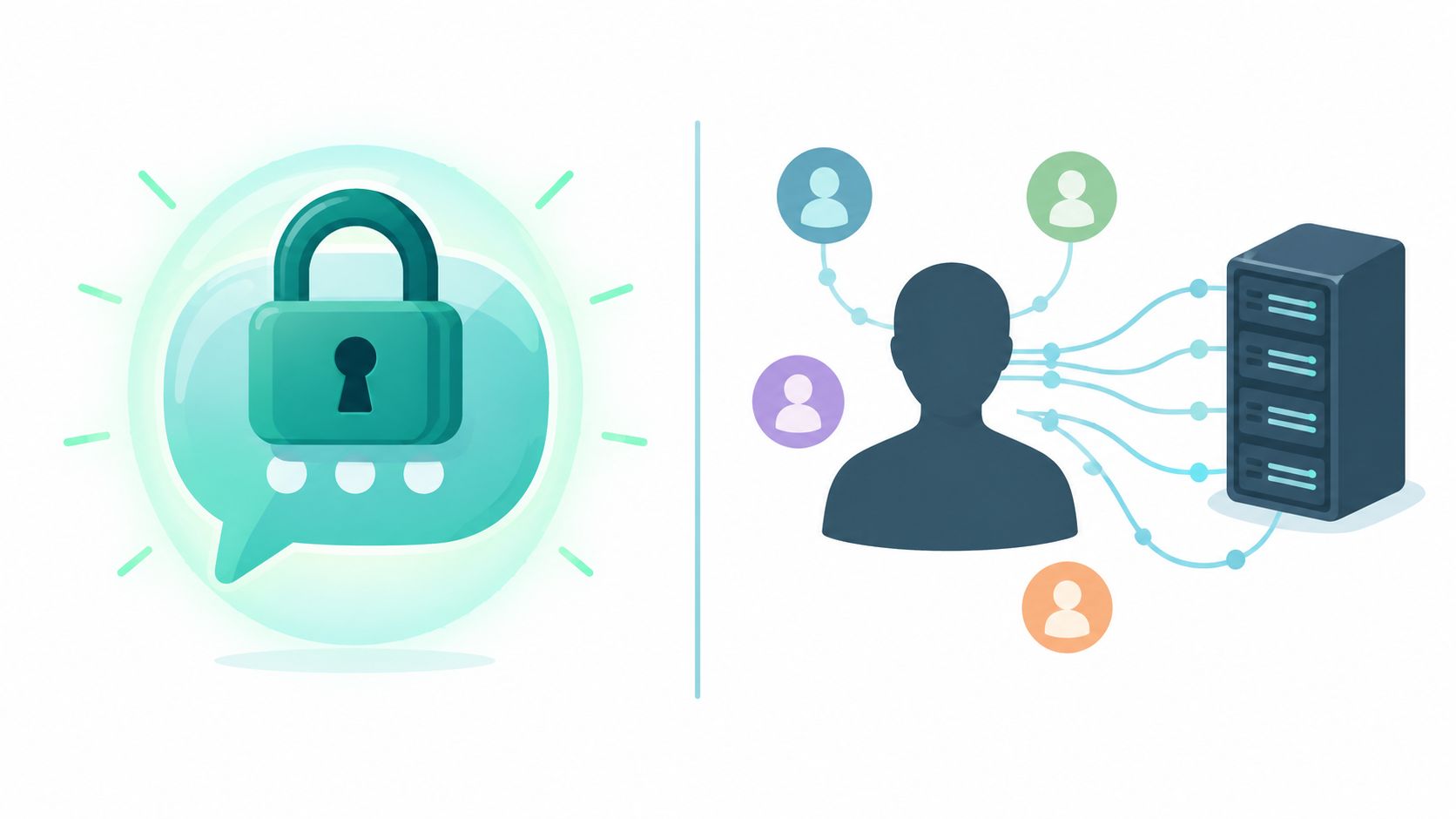
Encryption rarely fails outright. The more common failure is treating an encrypted message as an unobservable conversation. Even when message contents remain unreadable, timing, packet sizes, delivery notifications, and participation patterns can help an observer infer who communicates with whom, when activity occurs, and how often.
A browser-based room has exposure points beyond the message body. Network-layer identifiers may remain visible to infrastructure providers, while browser fingerprints can make sessions easier to correlate. A malicious extension, compromised endpoint, screenshot, copied file, or local device log can also defeat safeguards applied only within the chat protocol. Anonymity therefore functions as a spectrum of protections, not a binary property.
Protocol details determine whether encryption holds
AES-256-GCM provides authenticated encryption for chat. It protects confidentiality and detects tampering. NIST's guidance on key management identifies a serious implementation risk: reusing an AES-GCM IV with the same key can compromise confidentiality.
A sound design generates a fresh, unpredictable 96-bit nonce for every encrypted message, attachment, edit, reply, and voice frame, together with a 16-byte authentication tag. The protocol should authenticate context as additional authenticated data and reject duplicate or malformed nonces. Key generation, distribution, rotation, and destruction require defined controls. Cipher selection alone cannot compensate for weak lifecycle management.
Engineering rule: Evaluate nonce handling, key custody, authentication, retention, and relay visibility alongside the cipher.
Logs and endpoints still matter
A no-account service may still record connection events, room membership, access failures, timestamps, or network information beyond routing requirements. Read the service's no-logs policy as an engineering statement. Check its exclusions, retention boundaries, and disclosure procedures.
A short-lived room can protect against some later exposure while leaving endpoints, traffic patterns, and participants exposed during use. For cameras, microphones, or public broadcasts, review smart controls for live streaming privacy with chat-specific safeguards. Privacy controls must address capture, disclosure, and audience exposure as well as encryption in transit.
Why Ephemeral Chat Is Not Automatically Safer
Self-destructing messages solve one problem by creating another. They reduce the amount of readable material available after expiry, a server breach, or a compelled disclosure request. They also remove recovery, audit trails, continuity, and later proof of what participants agreed or received.
That trade-off is appropriate only when the value of avoiding retention exceeds the value of preserving evidence. A disappearing room isn't automatically safer. It's safer against some forms of later exposure and weaker against disputes, abuse investigation, and operational recovery.
Four contexts, four different decisions
Journalist-source intake may benefit from a short-lived first contact that doesn't require a source to surrender a phone number or create an account. The journalist should still move verified facts and publication decisions into a controlled workflow, because a disappearing conversation may remove evidence about consent, provenance, or threats.
Healthcare coordination often needs continuity, accurate handoffs, and appropriate records. An ephemeral room may support a narrow operational exchange, but it shouldn't silently replace systems designed for clinical documentation or patient-safety review.
Security incident bridging can favor rapid, identity-light coordination when participants need to share sensitive indicators without creating a permanent archive. Yet incident responders may later need timelines, decisions, and evidence. Capture only what policy permits, and move durable records into an approved system.
Legal communication can involve privilege, preservation duties, discovery requirements, and formal retention controls. A room that guarantees deletion may be operationally incompatible with the matter, regardless of how well it protects content during the session.
Accountability has a cost
Anonymous interaction can encourage disclosure, but it can also increase exposure to deception, emotional dependency, cyberbullying, and misinformation. Removing persistent identity and records can reduce surveillance risk while making abuse harder to investigate.
Use an ephemeral room when short-lived confidentiality is the primary requirement and the participants can verify one another through another channel. Avoid it when recovery, evidence, regulated recordkeeping, or long-term collaboration is essential.
Threat Model Guidance for Sensitive Use Cases
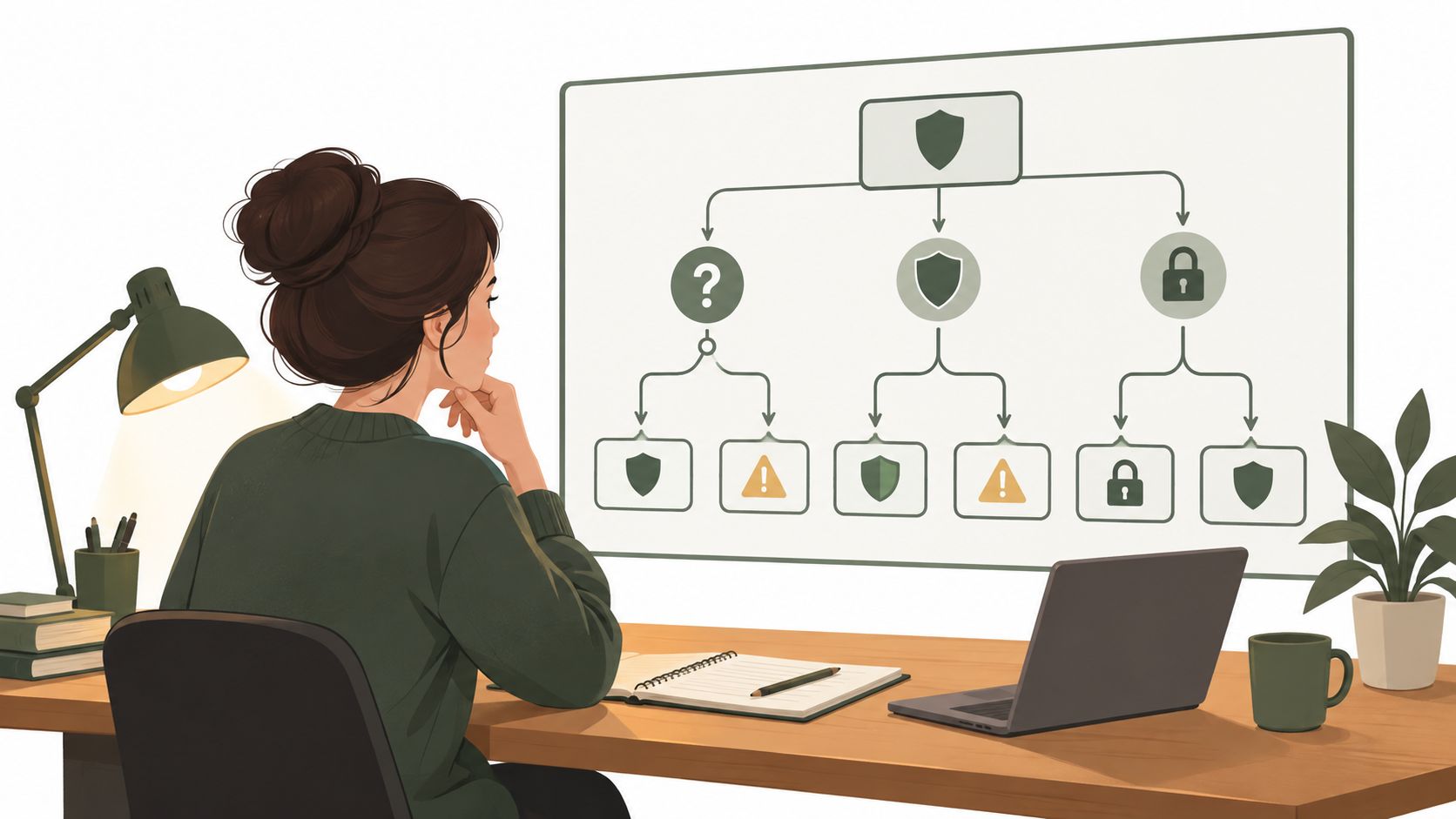
Start with the consequence, not the product. Ask what happens if the message becomes public, if participation becomes known, if the device is compromised, or if the conversation can't be recovered. The answers define whether an anonymous room reduces risk or creates a new failure.
Apply the decision test
Use this checklist before opening a room:
- Identify the protected asset: Is it the content, a participant's identity, the existence of the conversation, or all three?
- Name the adversary: Consider a curious service operator, an infrastructure provider, a hostile participant, a compromised device, or a legal demand.
- Test counterpart trust: Can participants verify each other independently, or does the room create a relationship with an unknown stranger?
- Check retention obligations: Does policy, law, professional duty, or incident procedure require a recoverable record?
- Define the failure response: Decide how participants will burn the room, report intrusion, preserve permitted evidence, and switch channels.
Journalists should share access credentials out of band, avoid identifying details in the room, and verify a source through a separate trusted method. Lawyers should exclude matters requiring formal records unless their approved workflow explicitly supports the tool. Healthcare teams need to distinguish temporary coordination from documentation that belongs in a governed record system.
Security researchers and incident responders should separate immediate coordination from evidence preservation. Executives handling a sensitive first contact should avoid assuming that anonymity authenticates the other party. A private room protects neither judgment nor identity verification.
Use this video as a practical prompt for reviewing session-level risks, especially where access, participants, and communication paths intersect.
Decision boundary: If you need a permanent archive, reliable identity assurance, or formal accountability, choose a system built for those requirements instead of forcing an ephemeral room to act like one.
Privacy-First Alternatives and Zero-Knowledge Design
Anonymous chat services differ sharply in what the server can see. A conventional service may provide aliases and private rooms while retaining readable messages, account records, or participation history. A zero-knowledge relay aims to keep decryption keys on the participants' devices and limit the server to data required to forward and expire encrypted material.
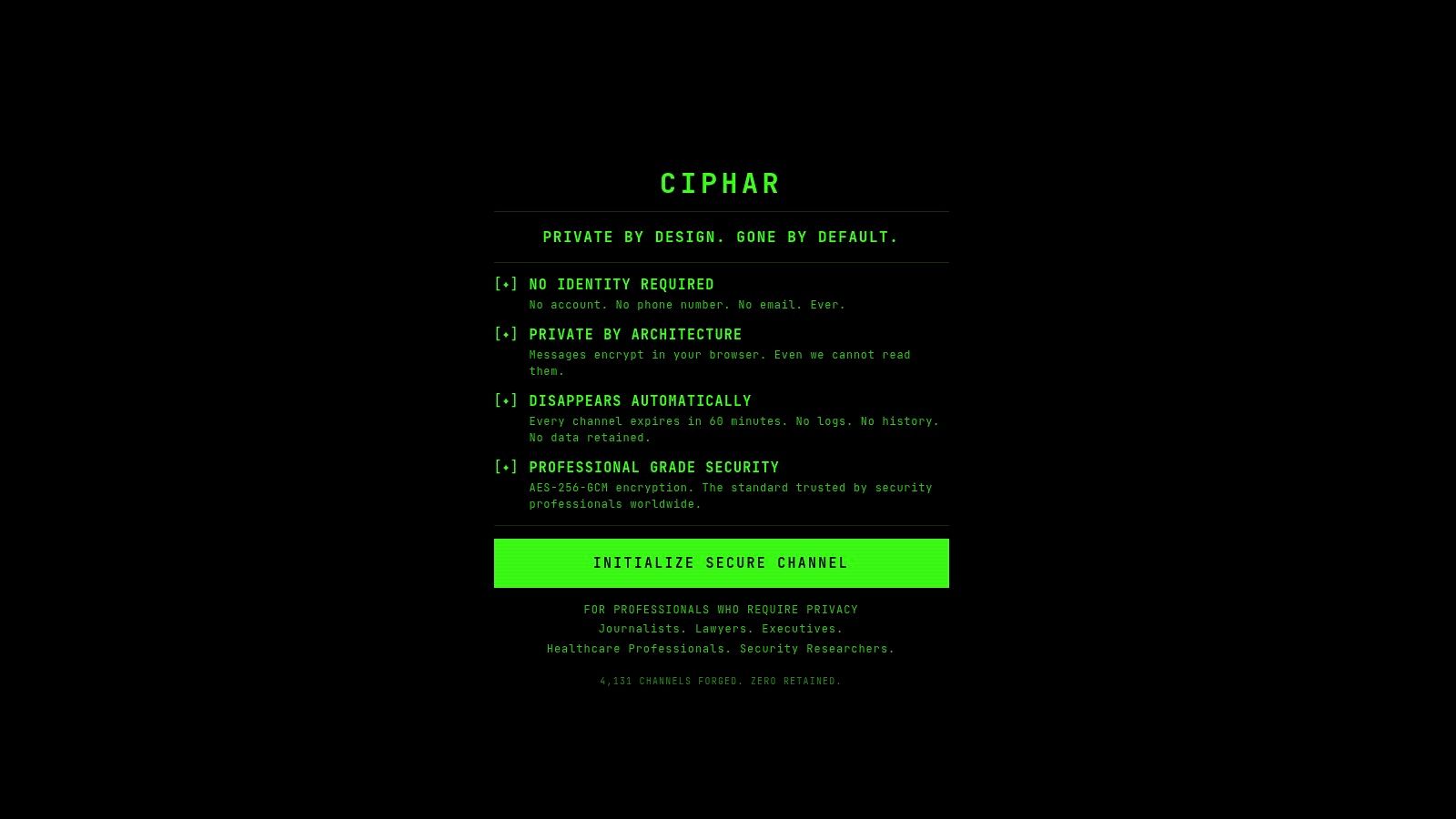
Ciphar is one example of this model. It provides browser-based, identity-free channels with no account, phone number, email, or installation requirement. Its one-time channels self-destruct after 60 minutes, and its documented design uses client-side AES-256-GCM encryption for messages, files, replies, edits, and voice frames.
Compare the actual properties
| Property | Conventional anonymous room | Zero-knowledge ephemeral room |
|---|---|---|
| Entry | May use a nickname or guest session | No account or persistent identifier |
| Content access | Depends on the service's server design | Client encrypts before relay storage |
| Retention | May be configurable or indefinite | Fixed expiry can prevent archiving |
| Recovery | Often available through history | Intentionally unavailable after destruction |
| Accountability | May support moderation records | Must rely on session controls and participant verification |
The browser derives channel keys with PBKDF2 and a per-channel salt, while the relay stores opaque ciphertext, initialization vectors, authentication tags, salt, and expiry state. Failed access attempts generate intrusion alerts and guessing is rate-limited. These controls reduce server-side content exposure, but they don't solve compromised endpoints, screenshots, traffic analysis, or a leaked access key.
A useful comparison should also ask what happens to reading data outside the chat itself. Services that summarize, analyze, or process text need transparent explanations, so users can see how your reading data is kept before sharing sensitive material.
For a deeper explanation of the architecture, review zero-knowledge encryption. The important practical point is not the label. It's whether the provider can decrypt content, whether the relay retains linkable metadata, whether expiry is enforced, and whether the product clearly states what it can't protect.
Best Practices for Safe Anonymous Chat Use
Use anonymous chat rooms online as a limited-purpose channel, not as a general replacement for identity-aware collaboration. Apply these checks before and during the session:
- Verify the service: Read its security model, retention policy, encryption documentation, and stated exclusions.
- Share credentials separately: Send the room link and access key through different trusted channels where the situation warrants it.
- Minimize disclosure: Don't place names, addresses, case identifiers, account numbers, or unnecessary personal details in the room.
- Check access behavior: Confirm that the service rejects incorrect credentials, surfaces failed-access alerts, and limits guessing.
- Review endpoint exposure: Use a trusted, updated device, inspect browser permissions, and assume participants can copy or photograph content.
- Know the expiry rule: Confirm whether deletion is automatic, whether manual burn exists, and whether recovery is impossible.
- Reject false promises: Treat “untraceable” or “completely anonymous” as red flags unless the provider defines precisely what those terms mean.
Don't reuse a room credential. Don't open a sensitive room on a shared or managed device without understanding local monitoring. Don't treat encryption as identity verification, and don't assume that a missing account means a missing network record.
If the conversation needs a formal archive, move it into an approved system before relying on deletion. If it doesn't need an archive, remove identifying context anyway, because the endpoint remains outside the room's control.
Conclusion and When to Avoid Anonymous Chat Rooms
Anonymous chat rooms online are useful when the objective is narrow: make first contact without exchanging identity details, coordinate a short sensitive conversation, or avoid creating a permanent message archive that could later expose participants. Their strongest protections come from minimizing identity data, encrypting content before relay storage, restricting retention, and giving users control over immediate destruction.
They aren't a substitute for every privacy or security tool. Encryption doesn't automatically hide participation metadata. Ephemerality doesn't erase screenshots, endpoint logs, copied files, browser compromise, or traffic timing. A service can reduce the server's ability to read or retain content while leaving other observers able to infer that communication occurred.
Avoid anonymous rooms for regulated recordkeeping, legal evidence preservation, long-term collaboration, formal healthcare documentation, or any matter that requires verified identities and durable continuity. In those settings, the absence of an audit trail is a liability, not a benefit.
The right question isn't “Is this chat anonymous?” Ask instead: Which identity data is absent, which content is encrypted, what metadata remains, who can observe the connection, and what must survive the session? Those answers turn a vague privacy claim into an operational decision.
Ciphar offers browser-based, zero-knowledge encrypted rooms for short, identity-free conversations, with client-side encryption, access-key sharing, and enforced 60-minute expiry. Review the Ciphar security model and decide whether its limited-retention design fits your threat scenario.