
Digital sovereignty is the ability of a state, institution, community or individual to retain meaningful authority over digital data, infrastructure, technologies and the rules governing their use.
If your files sit on a server in your own country, but someone elsewhere holds the encryption keys and controls every software update, who's in charge? That question exposes the gap between where data lives and who controls what happens to it. A useful sovereignty assessment starts with decision-making power, not a map of data centres.
What Digital Sovereignty Means in Plain Terms
Think of a house. Having your name on the address doesn't mean much if someone else holds every key, chooses who enters and can change the locks without your permission. Digital sovereignty concerns those practical rights, applied to information and technology.
Say a community organization stores its membership records with a cloud service. Meaningful authority includes deciding what information it collects, who can use it, where it can travel and when it must be deleted. Selecting a nearby server answers only part of that problem.
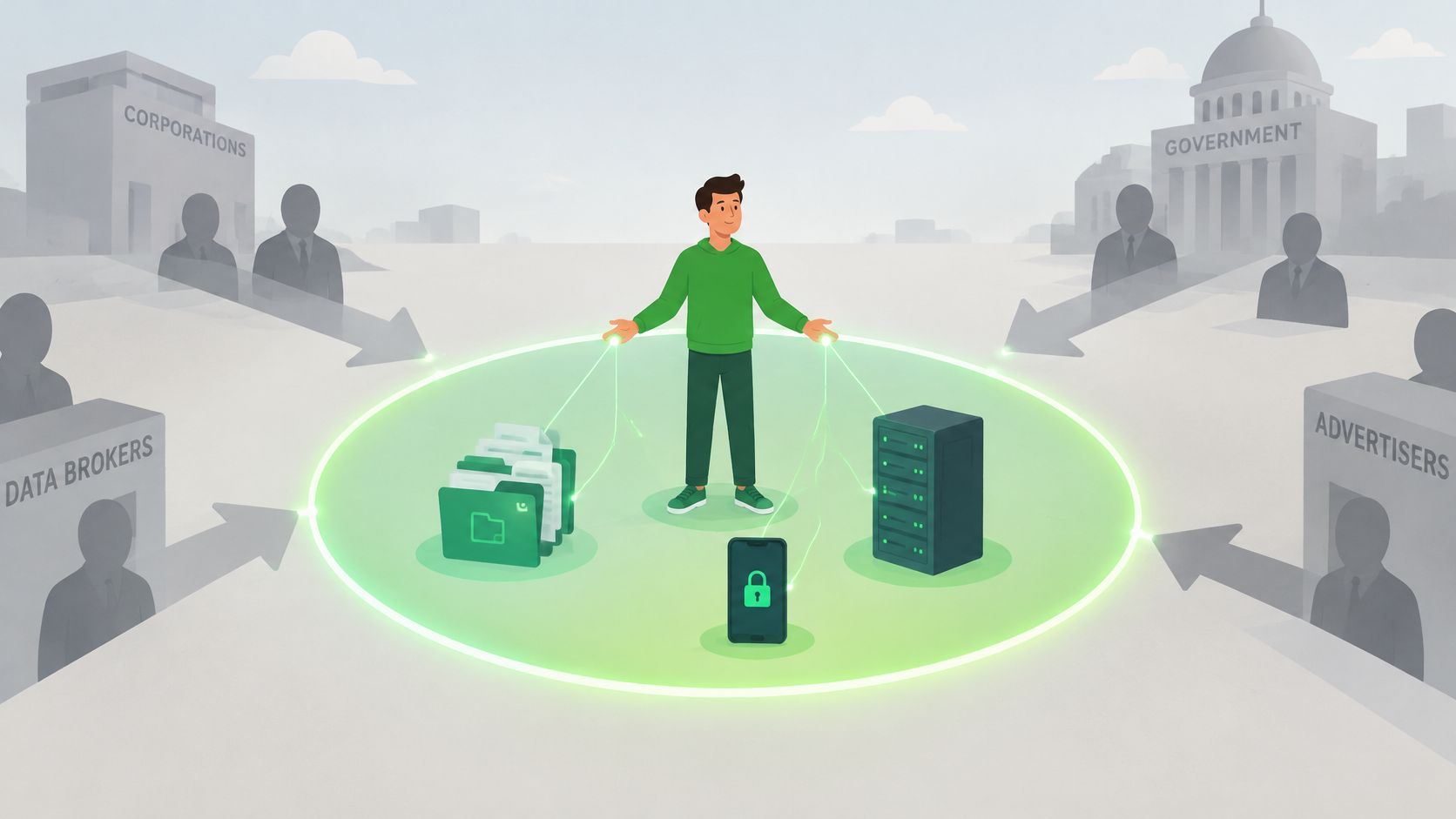
UNCTAD's Digital Economy Report 2021 explains why territorial borders don't translate neatly to internet data flows, and why domestic storage doesn't automatically create political or developmental sovereignty. Definitions differ across jurisdictions and political contexts, but the central issue is the ability to make meaningful decisions.
Related terms without the confusion
- Data residency describes where data is stored.
- Data localization means a legal requirement to store data within a particular country.
- Data sovereignty focuses on authority over data and the rules governing it.
- Digital sovereignty extends that authority to infrastructure, technologies and their governance.
The idea applies at different levels. Governments regulate cross-border transfers, regional blocs establish common standards, organizations govern sensitive systems, and individuals exercise rights over personal information.
The challenge isn't to disconnect from global networks. It's to use connected services while keeping decisions accountable and preserving practical choices.
First self-check: If a provider changed its terms tomorrow, who would decide what happens to your data?
Residency, Access, Control and Reversibility Compared
A hosting address can tell you where a storage device sits. It won't tell you who can decrypt its contents, authorize an update or restore your service after a dispute.
IDC's explanation of digital sovereignty treats the subject as broader than data location, encompassing operations, technology, jurisdiction, supply chains, cybersecurity and connectivity. For a purchasing decision, it helps to separate those concerns into residency, access control, operational control and reversibility.
Four dimensions of control and what each one tests
| Dimension | Question it answers | Typical gap | Evidence to ask for |
|---|---|---|---|
| Residency | Where does the data physically sit? | Stored locally but keys held abroad | Hosting region and data location record |
| Access control | Who can read the content? | Provider staff can decrypt on request | Key custody statement and encryption design |
| Operational control | Who can administer, patch and deploy? | Foreign vendor pushes all updates | Admin access list and release signing records |
| Reversibility | Can you leave or recover without the provider? | Proprietary formats block migration | Documented export path and a tested migration |
Consider a company that chooses domestic hosting for its customer records. Its foreign supplier nevertheless holds the decryption keys and delivers every application update. The company has established residency, but it hasn't established independent authority over access or software behaviour.
Even a usable export button may offer less freedom than it appears to. If the export excludes permissions, attachments or relationships between records, rebuilding the working system elsewhere could still be difficult.
Evidence matters more than labels
Test the claim with concrete records:
- Documented key custody: Identify who generates, stores, rotates and can use the decryption keys.
- Customer-held administrative records: Maintain an access list showing privileged accounts, their owners and their powers.
- A tested migration path: Move a representative workload into another environment and verify that it still works.
These distinctions matter whenever confidentiality and continuity meet. A journalist needs protection for source material, while a healthcare team also needs reliable access to information needed for care. Neither requirement is satisfied by a hosting-region label alone.
For cloud services, data protection in the cloud requires examining these responsibilities together. Strong residency can't compensate for unrestricted administrative access, and strong encryption can't compensate for an unusable exit route.
Legal, Political and Technical Dimensions Explained
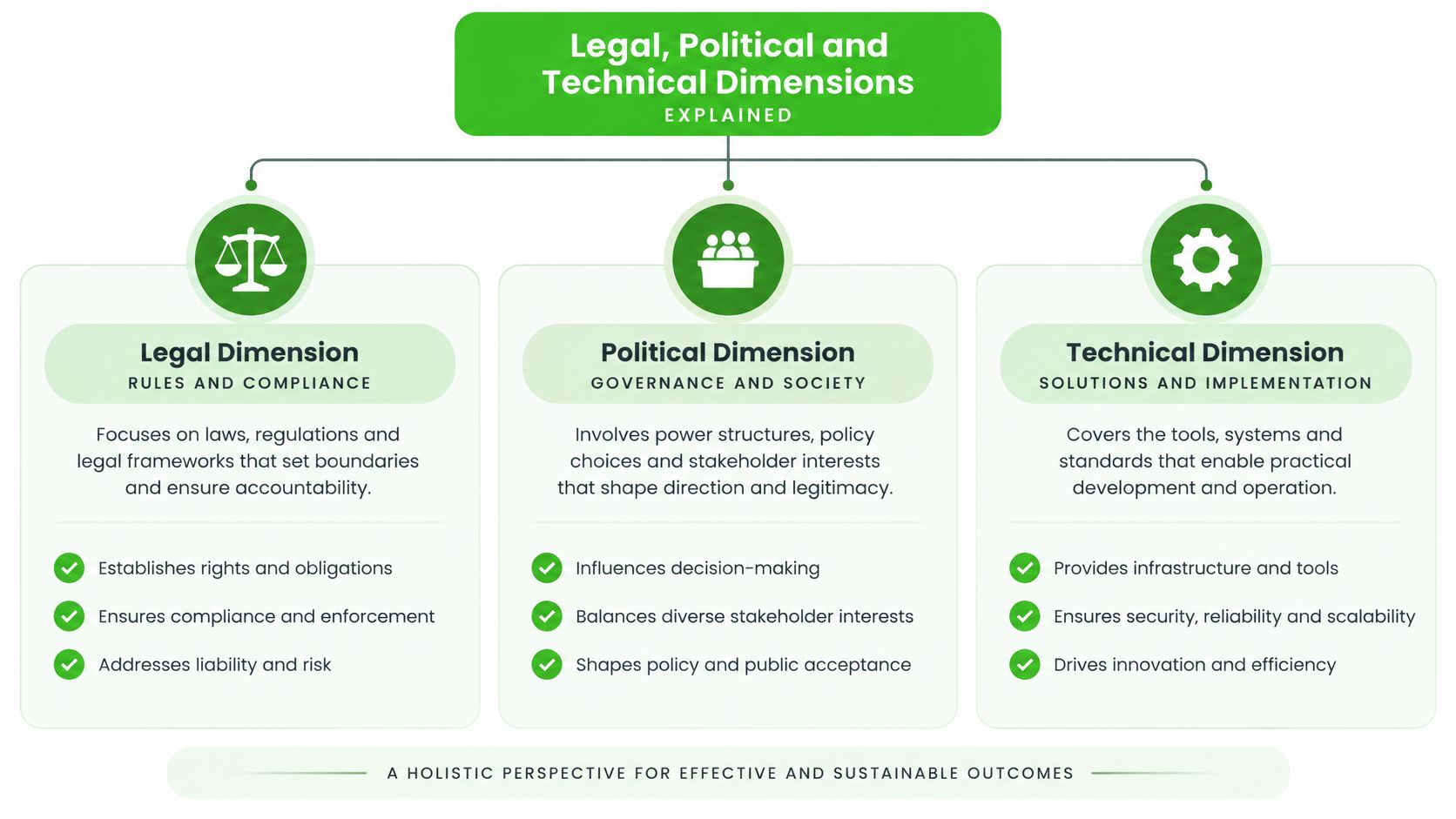
Legal authority concerns which rules apply and who can enforce them. An assessment should identify the organizations handling information, their jurisdictions, the rules governing transfers and the legal routes through which authorities might seek access.
A customer database might involve a domestic business, an overseas service provider and a foreign subsidiary. In that scenario, don't assume that the customer's location determines every obligation. Map who possesses or controls the information, then obtain legal advice about the obligations attached to those relationships.
Legal obligations and political choices
A data processing agreement helps document responsibilities between a customer and a processor. It doesn't replace an investigation of actual access, subcontractors or technical controls.
Political sovereignty concerns whether a government or regional bloc can pursue its policies without unacceptable dependence on external suppliers. The European technological-sovereignty framing presented through UNCTAD emphasizes developing, controlling and scaling critical technologies, infrastructure, services and data while reducing strategic dependencies and exposure to foreign interference.
That doesn't require producing everything domestically. It does require distinguishing an ordinary supplier relationship from a dependency that leaves no workable alternative.
Technical capability makes decisions possible
The European Parliament's account of technological sovereignty includes the ability to design, develop, produce, control and protect the digital infrastructure society depends on. That extends across hardware, software, cloud platforms, cybersecurity and communications networks.
Consider a hypothetical hospital whose cloud provider changes its pricing or access conditions. The hospital wants to move, but its team can neither inspect the application nor reproduce it elsewhere. A procurement disagreement now threatens service continuity, creates questions about contractual obligations and may require public authorities to intervene.
The problem isn't that the supplier is foreign. The hospital lacks a practical alternative and the capability to carry out its decision.
A contractual right to leave is weaker than a demonstrated ability to leave.
Law can establish responsibilities and remedies, but it can't supply missing engineers, replacement infrastructure or functioning migration tools. Technical capability, meanwhile, doesn't establish legitimate authority or protect rights by itself. Sovereignty needs both capability and accountability.
Who Digital Sovereignty Affects in Practice
Governments face these questions when they regulate cross-border transfers, buy public infrastructure or coordinate standards with regional partners. They need to consider whether essential services remain available when commercial relationships or international conditions change.
Organizations meet the same problem through everyday work. A journalist considering a messaging service must assess whether a policy change could expose source information; a lawyer must consider access to privileged material; a healthcare team must protect sensitive communications without undermining appropriate record-keeping.
Different responsibilities, practical consequences
- Journalists and sources: A provider's access practices can affect confidentiality even when participants avoid publishing identifying details.
- Lawyers and clients: An inaccessible archive or supplier outage can disrupt case preparation and client service.
- Healthcare teams: Choosing an informal communication tool can conflict with retention, oversight or compliance needs.
- Businesses: Dependence on cloud, messaging, AI or collaboration platforms can restrict how quickly teams respond to changed terms.
In 2025, 84% of 295 companies surveyed in a BARC study commissioned by Exasol, A1 Digital and Dataciders considered data sovereignty a central part of their strategy, according to A1 Digital's account of the study. For those respondents, the issue was a business-planning concern, not just a government debate.
Organizations assessing European privacy responsibilities may also find DilicheckRep's Article 27 representation service relevant when investigating representation arrangements. Representation and technical independence address different responsibilities; neither substitutes for the other.
Individuals need workable choices too
Individuals exercise sovereignty through their rights over personal information and their choice of services. A useful question is whether a tool requires unnecessary identity information or allows people to move their information elsewhere.
Say a small law firm adopts an overseas collaboration platform. When the terms change, the partners decide to leave, only to discover that the archive export omits essential context and requires extensive reconstruction.
The decisive test wasn't whether the contract looked reassuring when signed. It was whether the firm could act when its needs and the supplier's decisions diverged.
Where Privacy Tools Like Ciphar Fit the Goals
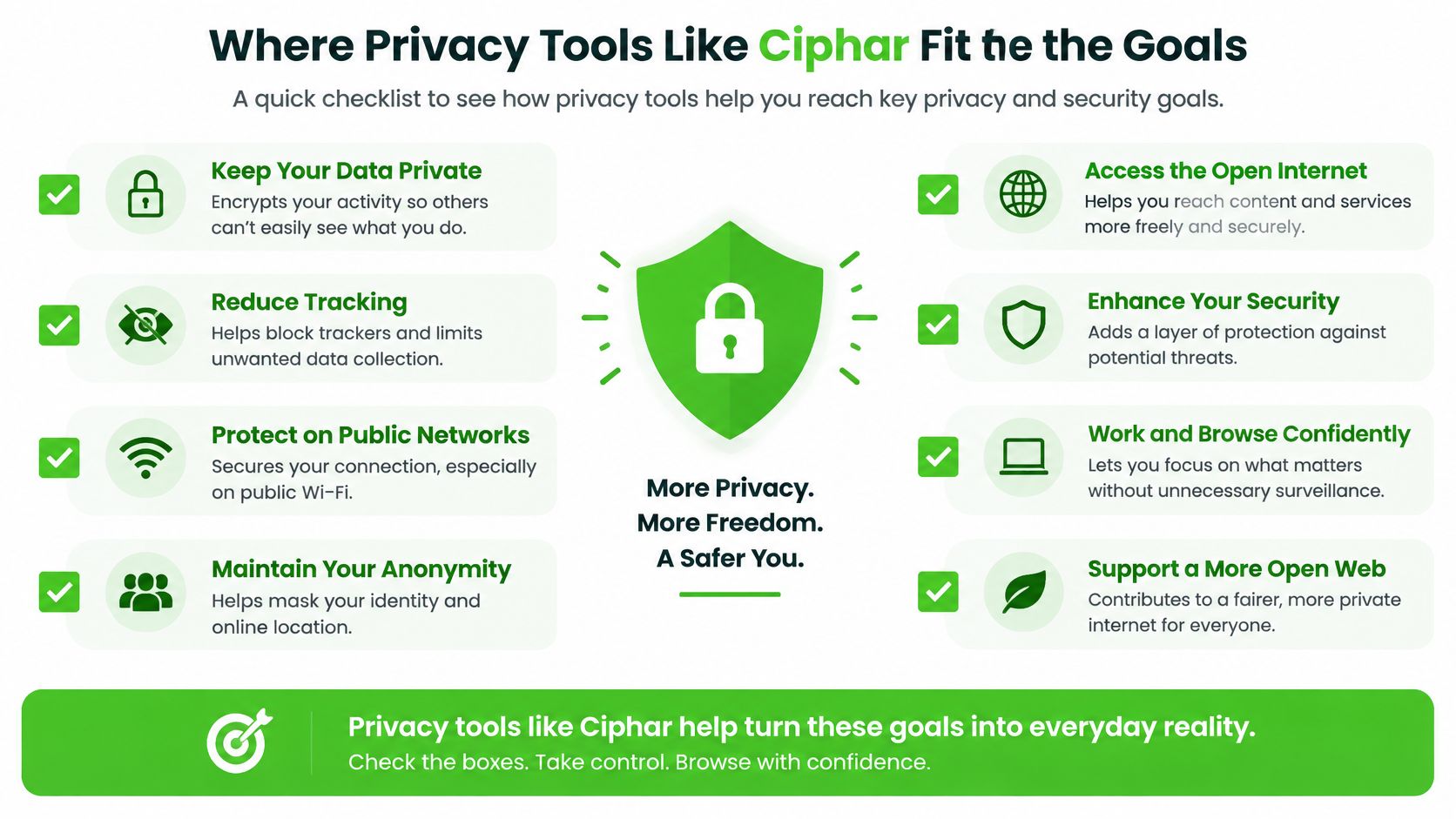
Privacy tools can reduce a particular dependency without making an entire organization digitally sovereign. The useful comparison is between what a design prevents an operator from doing and what users must still trust.
At Ciphar, we focus on short, identity-free conversations in the browser. Our design reduces the confidential information entrusted to the relay, rather than asking participants to rely only on a promise that the operator won't read it.
Match the goal to the design
- Minimize what the relay can know: Our relay sees opaque ciphertext, an initialization vector, an authentication tag and an expiry timestamp. It never sees passwords, derived keys, readable messages or readable files.
- Keep decryption authority with participants: The derived encryption key stays in browser memory and is never sent to the server. The access key doesn't touch the server either.
- Make retention a system constraint: Channels self-destruct after 60 minutes, with no archive and no recovery. Participants can also burn a session immediately.
- Avoid unnecessary identifiers: No account, phone number or email is required.
- Protect content before transmission: Messages, files, replies and voice frames are encrypted in the browser before they reach the network.
The distinction behind client-side encryption is where readable information becomes encrypted. When encryption happens on the participant's device, the relay doesn't need the decryption key to deliver the encrypted material.
Our zero-knowledge principle concerns plaintext: we can't surrender readable content we can't decrypt. In response to lawful process, the operator can provide only encrypted blobs that expire, because it holds no plaintext, keys or message history.
Put the limitations beside the benefits
That architecture doesn't eliminate trust in the browser, the code delivered to it or the libraries used by the application. A compromised endpoint can expose information while a participant reads or types it. Encryption also doesn't resolve every metadata or jurisdictional concern.
We haven't been formally assessed against HIPAA, GDPR data processing agreements, PCI-DSS or similar regimes, and we aren't compliant with them. Confidentiality features shouldn't be mistaken for a regulated-communications assessment.
There's also an intentional loss of convenience. We have no key escrow, recovery mechanism or backdoor, so lost access can't be restored by an administrator. Participants must decide whether that trade-off suits the conversation before using the channel.
Use-case boundary: A conversation that must become an official record needs an approved record-keeping process, not merely a private channel.
This makes the design suitable for considering short, sensitive exchanges within a wider security setup. It isn't a long-term messenger, an archive or a replacement for systems with retention and audit requirements.
How to Assess Your Own Sovereignty Position
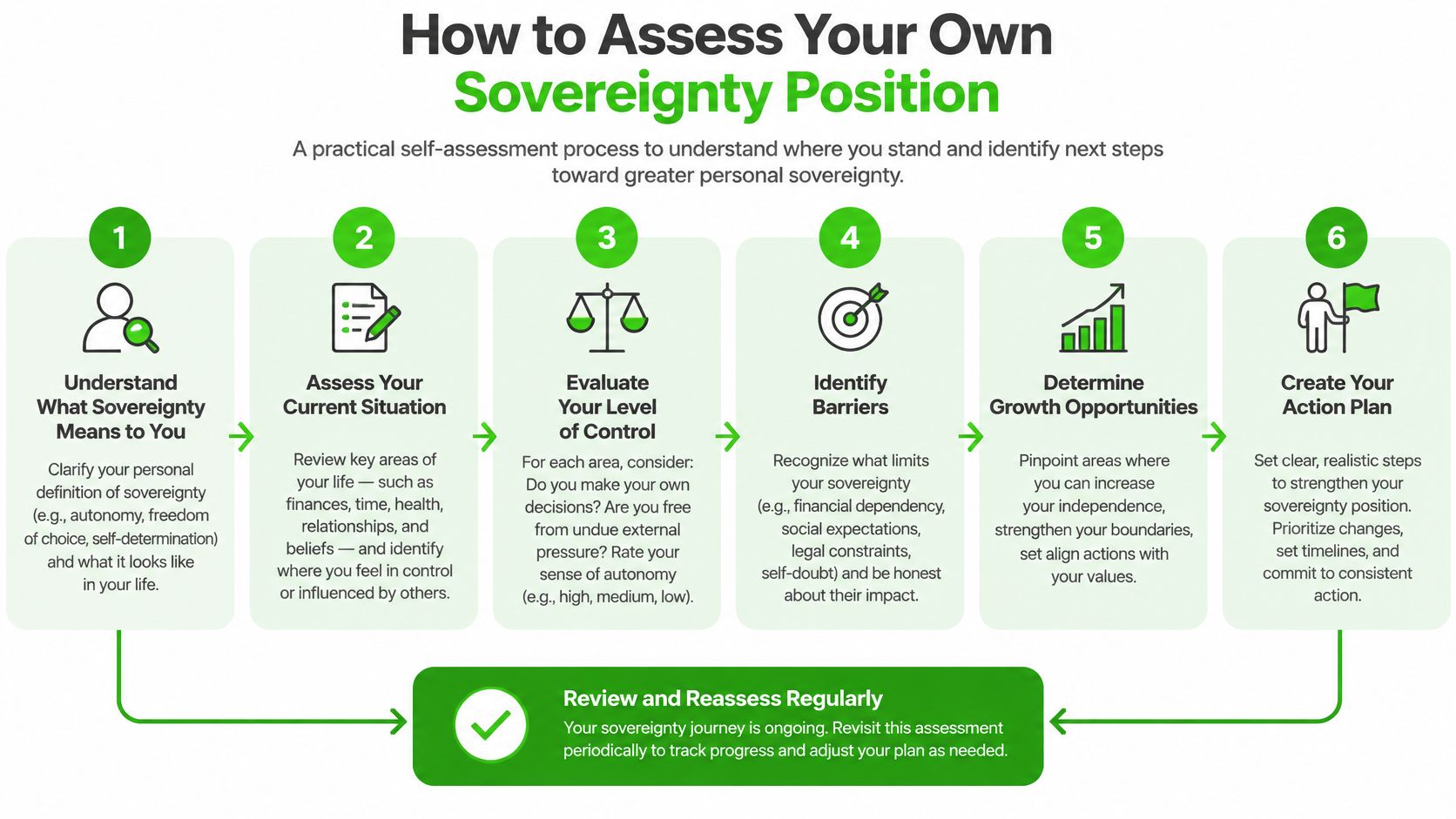
Assess substitutability, meaning whether you can replace a system without losing essential functions. The Joint Research Centre's sovereignty guidance recommends examining interoperability, customer-controlled deployment and portability rather than treating European origin, open-source licensing or local hosting as proof.
Turn assumptions into tests
- Inventory dependencies. Include hosting, keys, administrator accounts, updates, domains, relays, cloud interfaces and third-party libraries. Unlisted dependencies escape review.
- Measure replacement time. Run a move or rebuild exercise, recording obstacles rather than accepting an estimated completion date.
- Check portability and administration. Confirm usable exports and identify who can deploy code, rotate credentials and authorize releases.
- Examine compromise exposure. Determine whether a breach would reveal plaintext, encrypted material or authority to alter future software.
- Flag lock-in. Closed interfaces, provider-held keys and proprietary formats deserve explicit remediation decisions.
- Weigh operational trade-offs. Reduced retention may improve confidentiality while preventing recovery, oversight or forensic reconstruction.
Sovereignty scorecard
Use these test criteria to record evidence, not assumed passing grades.
| Dependency | Replacement time | Portability | Admin control | Exposure if compromised |
|---|---|---|---|---|
| Hosting and region | Time a clean redeployment | Restore data and workloads elsewhere | Confirm customer deployment credentials | Inspect stored data and snapshots |
| Encryption keys | Time rotation and re-encryption | Test supported key migration | Identify every key custodian | Test whether content becomes readable |
| Admin accounts and deployment | Time access revocation and rebuild | Recreate roles independently | Verify release and credential owners | Assess privileged takeover |
| Software updates and libraries | Time replacement and validation | Build from documented dependencies | Verify signing and update authority | Assess malicious-code delivery |
| Domain and relay | Time transfer and relay rebuild | Test configuration redeployment | Confirm domain and relay ownership | Assess redirection and traffic exposure |
A strong result combines a demonstrated replacement route, usable portability, accountable administration and limited breach exposure. Record an owner and a corrective action for every unresolved dependency.
Start Your Sovereignty Review This Week
What would happen if your team lost access to a service tomorrow? Digital sovereignty means being able to make consequential technology decisions and carry them out without another party holding an unexamined veto.
A server's location alone cannot answer that question. Check who controls the keys and administration, whether your team can operate or replace the service, and what happens to your data if access ends. Encryption and open-source licensing matter, but neither removes the need to assess devices, software updates, legal responsibilities and operational readiness.
Choose one dependency and make a decision
This week, select the service whose loss would disrupt your work most. Use the scorecard to record evidence, then decide whether to keep the service, migrate away from it or limit the information and tasks you entrust to it.
Name an owner for that decision. If you keep the service, record what would prompt a fresh review, such as changed access terms, a new subcontractor or a failed recovery test.
Sovereignty is an ongoing practice, not a certificate earned at purchase. Revisit the decision when the provider, your obligations or your ability to operate independently changes.
For short, sensitive conversations, Ciphar offers browser-based encrypted channels without requiring an account or phone number. Visit Ciphar's site to review its security model and decide whether temporary, participant-controlled communication fits your dependency review.