You're sitting with a question you don't want attached to your name. Maybe it's a legal worry you haven't told your employer about, a health concern that's embarrassing to say out loud, or a relationship problem where a searchable post could follow you for years. You want a straight answer, but you don't want to hand over a phone number, create another account, or leave a history someone can find later.
That's the tension at the heart of anonymous chat for advice. Anonymity, quality, and safety pull in different directions, and no single service maximizes all three. A room nobody can trace back to you may have nobody qualified in it. A well moderated service may need registration details to keep people safe, a trade off that's also clear in how Therapy with Ben explains confidentiality in a professional setting.
This list is sorted by threat model, not popularity. You'll find one time encrypted rooms for identity free first contact, professionally moderated peer support where trained humans matter more than encryption, and community forums where you're pseudonymous to other members but not invisible to the platform. Match the category to who's a risk to you, a boss, a family member, a service provider, or a stranger, and the right choice gets much clearer.
1. Ciphar
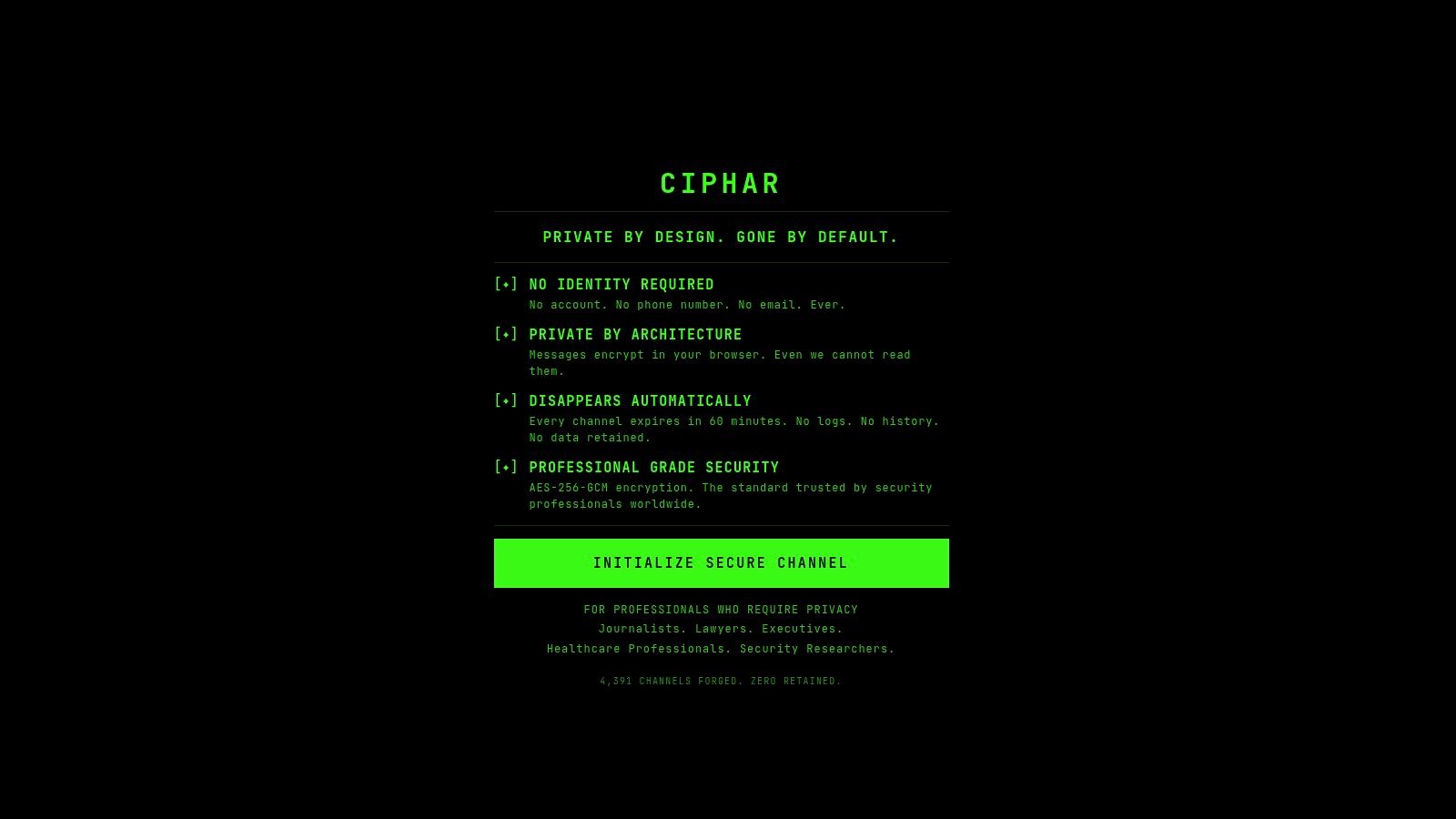
If your threat model is identity exchange itself, start here. Ciphar is a browser based encrypted chat for short conversations where installing an app or swapping phone numbers isn't appropriate. You click Initialize Secure Channel, share the link and access key over a trusted separate channel, and talk. The other person needs no account, phone number, or email; they open the link, paste the key, and they're in.
How the Protection Actually Works
Messages, files, replies, edits, and voice frames are encrypted in your browser with AES-256-GCM before they touch the network. Keys are derived locally using PBKDF2 with 100,000 SHA-256 iterations and a per-channel salt, so they never reach the relay, which stores only opaque ciphertext, IVs, auth tags, and expiry timestamps. An encrypted test blob checks the key before anyone is admitted, and failed attempts post in-channel alerts and get rate limited.
Channels expire after a strict 60 minutes, enforced server-side, with no archive or recovery. A burn button wipes the session immediately, no confirmation and no undo. Voice rooms run over an end-to-end encrypted WebSocket relay and leave no recordings or transcripts. The only figure the service keeps is a global count of channels forged, with no per-channel history retained.
I recommend it for journalist and source, lawyer and client, or security researcher first contact, where the conversation itself is the sensitive fact. Two limits apply: the service prohibits planning harm, fraud, and unauthorized spam or bots, and it isn't intended for anyone under 16.
- Best for: One time, identity free conversations on desktop or phones, with text, files, and optional encrypted voice under the same one hour limit.
- Watch out for: That fixed lifetime. Lose the access key and the channel's unrecoverable, and it isn't built for long term messaging or regulated communications that need audit trails.
Practical rule: Send the access key somewhere different from the link. If both travel together, anyone who intercepts one message has everything.
2. 7 Cups
Sometimes you don't need encryption. You need a human who'll listen right now. 7 Cups offers free, on demand one to one chats with volunteer Active Listeners, plus topic forums, group chats, and self help guides. Paid therapy is offered separately, and that distinction matters.
You can browse listeners and request a specific person, which gives you more control than random matching. Coverage is broad, from loneliness and work stress to relationships, so it's a reasonable first stop for talking something through rather than getting a specialist opinion. If you're comparing formats, this guide to anonymous chat rooms online is useful background on how room based models differ from one to one listening.
Where It Falls Short
Listeners aren't necessarily clinicians or subject matter experts, and quality varies a lot between conversations. A warm listener can still give you poor practical advice. Some community features also require an account, so you're pseudonymous to other users, not identity free from the platform.
- Best for: Low stakes personal concerns where being heard matters more than credentials.
- Not for: Medical, legal, or crisis questions where a wrong answer carries real consequences.
Treat a good chat here as perspective, not a verdict. If a listener pushes you toward a major decision, get a second, qualified opinion before you act.
3. HearMe Chat
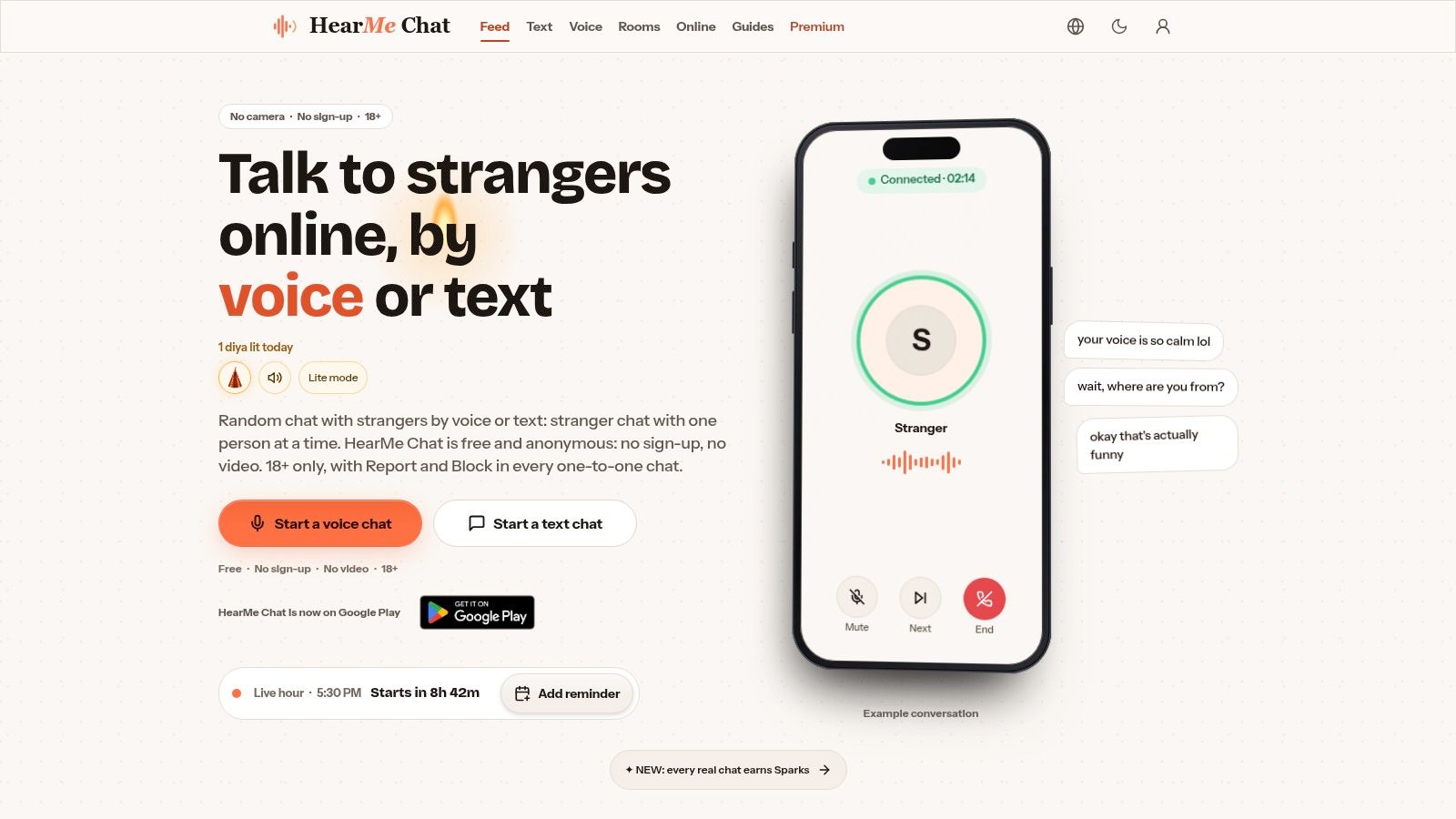
HearMe Chat has the lowest barrier on this list. Adults can start a basic guest text or voice chat with a stranger, no account needed and no video. Matching uses shared interest tags, and an optional account gives you access to friends and direct messages if you want continuity later.
That speed is the appeal and the risk. You'll get a quick, casual outside perspective, which can help you sanity check how a situation sounds to someone with no stake in it. Text mode also lets you avoid sharing audio, worth remembering if your voice could identify you. There's more on that trade off in this overview of an anonymous voice chat app and when voice helps or hurts.
A stranger's confidence isn't evidence. The more certain an untrained chat partner sounds about health or legal matters, the more carefully you should check what they said.
Partners here aren't trained advisers, and the service isn't intended for professional or crisis support. Messages may be temporarily retained for moderation, with reporting and human moderators in place. That's sensible safeguarding, but it means anonymous to your chat partner doesn't mean unreadable by the platform. Keep identifying details out, and leave any conversation that turns pushy or strange.
4. TalkLife
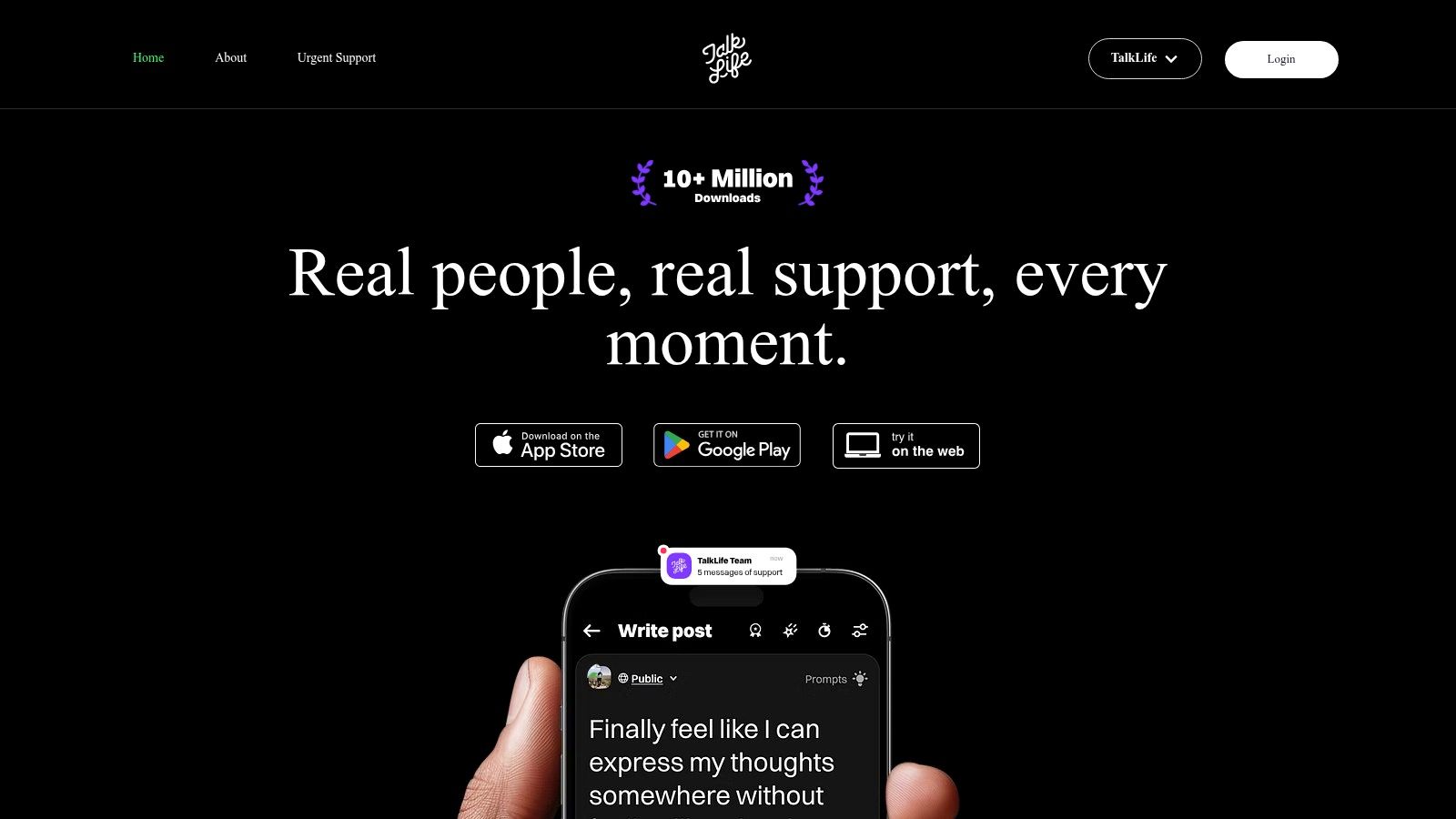
TalkLife works best when you want a community, not a single conversation. It's a peer support network built around public posts, private messages, and group chats, with Peer Buddies, moderators, community guidelines, and reporting tools. You can post under your profile or anonymously to other members.
That choice is useful. Post publicly when you want several perspectives on a shared experience, then move to direct messages with someone whose situation resembles yours. It's free for personal use, and ongoing contact is possible in a way ephemeral rooms deliberately prevent. This explainer on choosing an anonymous chat app covers how account based apps like this compare with browser only options.
The Account Trade Off
An account with an email address is required, so your anonymity stops at the community boundary. Advice comes from peers who may not be qualified, however relatable their experience feels. TalkLife also isn't a clinical or crisis service.
- Use it for: Shared experience, encouragement, and hearing how others handled similar situations.
- Avoid relying on it for: Diagnosis, treatment decisions, or anything you'd be upset to see quoted back to you later.
5. Togetherall
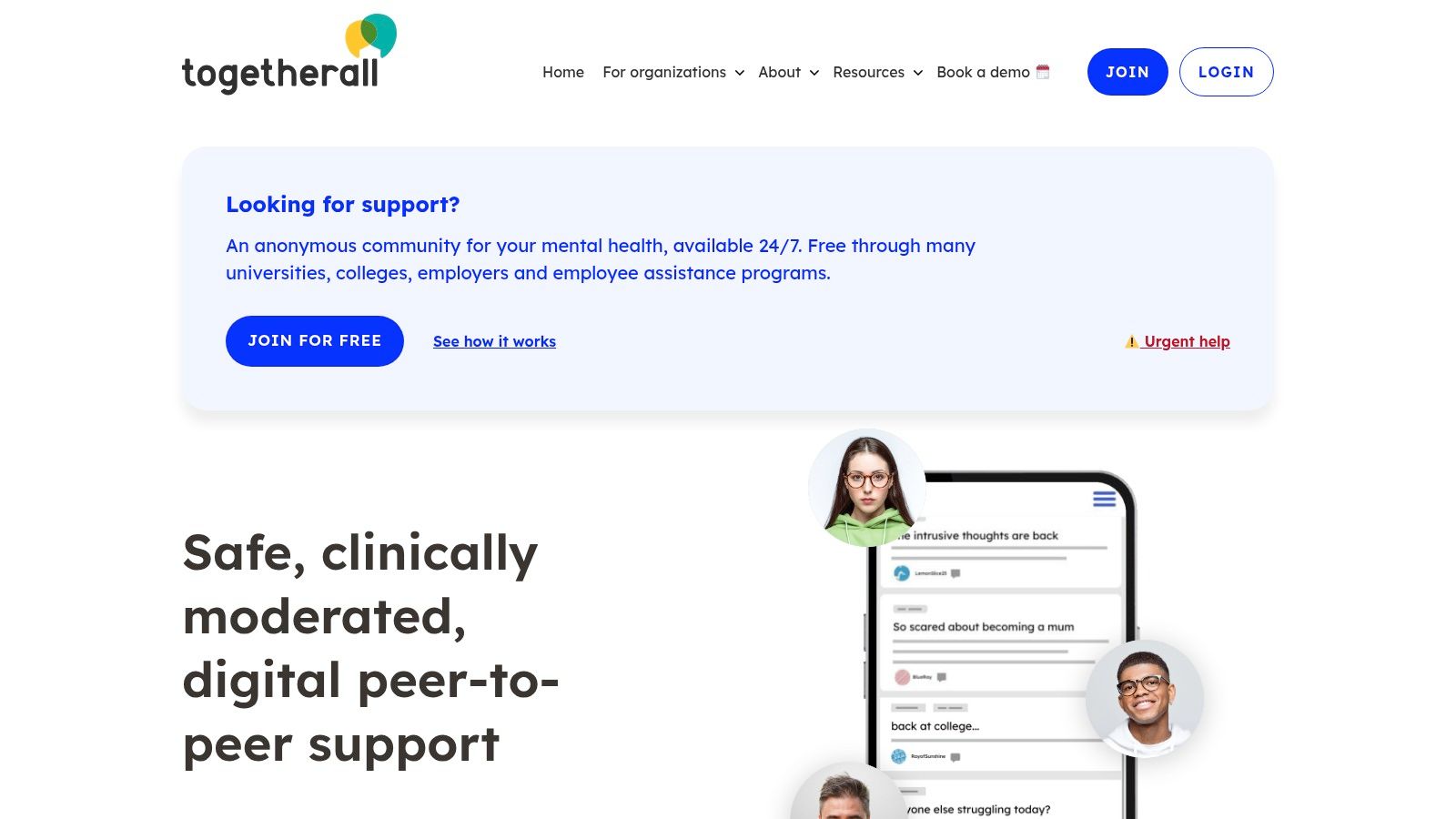
Togetherall is the most structured community option here. Members join under an anonymous member name and get group discussions, one to one chats, self help courses, and creative tools. Trained mental health professionals moderate the community around the clock, which sets it apart from a general chat forum.
That moderation changes what you can reasonably expect. Discussions are less likely to spiral, harmful content is more likely to be caught, and guided resources sit alongside peer input when you don't want to talk at all. For wellbeing advice where safeguarding matters more than cryptographic guarantees, I rate this model highly.
Who Can Actually Get In
Free access generally comes through participating organizations rather than open signup, so eligibility depends on your location, employer, university, or health service. Registration is required and personal information is processed, even though other members see only your anonymous name.
- Best for: Ongoing wellbeing support with professional oversight, if you're eligible.
- Limits to know: It isn't an emergency service, and you can't treat it as identity free access.
Check eligibility first. If you qualify, it's a strong default. If you don't, you haven't lost time creating an account you can't use.
6. TakeMyHand
TakeMyHand skips random matching entirely. It's a free live peer chat service from Riverside University Health System Behavioral Health in California. You choose an anonymous name and talk one to one with a trained peer support specialist who draws on lived experience and formal training.
That combination produces a different kind of conversation. Specialists can listen, share perspective, and point you to concrete resources rather than just reacting. Where it's appropriate, they may connect you with a clinical therapist, so there's a path beyond the chat itself if your situation needs one.
Availability is the main constraint. Live chat runs only during published hours, so it won't help at 3 a.m. unless the schedule says otherwise. The service is intended for people aged 16 and older, it's tied to Riverside County's program, and it isn't an emergency service.
- Best for: A focused, human conversation with practical next steps during operating hours.
- Plan around: The schedule. Check hours before you need it, not during a rough moment.
If you're in its service area and want peer support with institutional backing, this is more trustworthy than any stranger matching app.
7. QLife
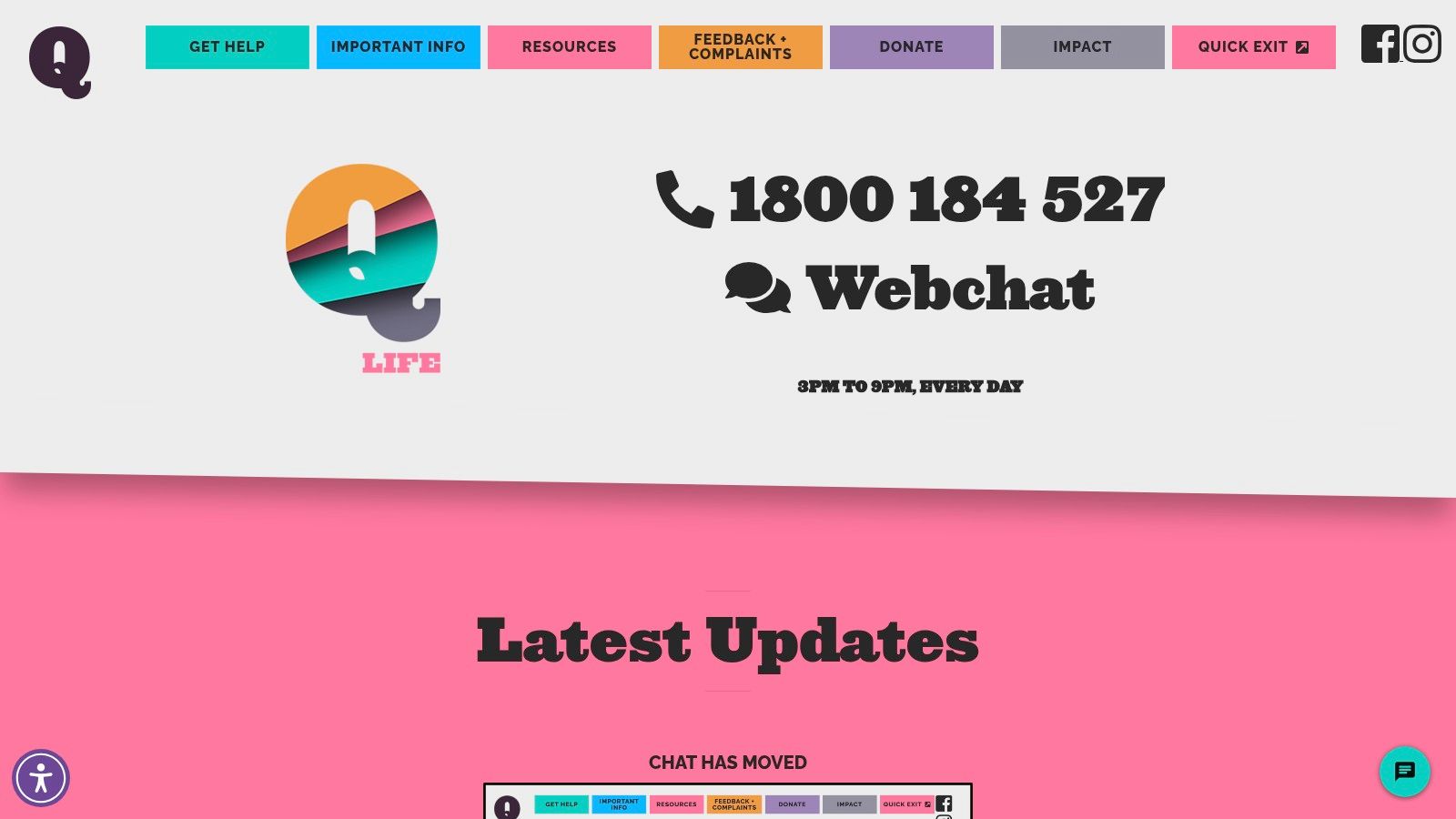
Generic support can miss the point when identity is part of the problem. QLife provides free, anonymous peer support and referrals for LGBTIQA+SB people in Australia and the people supporting them. Its webchat connects you with community peer supporters who understand that context without you having to explain it first.
You don't need to use your real name, there's no fee, and anonymous contacts don't create a long term case file. QLife also explains anonymity and its limits clearly, which is rarer than it should be. Supporters can help you find inclusive services and resources, so a short chat can still lead somewhere useful.
Timing and Scope
Webchat runs daily from 3 p.m. to 9 p.m. local time, not around the clock, and access is filtered by location because the service is for people in Australia. Sessions are limited to about 25 minutes and don't provide clinical counselling.
Before you start: Decide on the one question you most need answered. In a 25 minute session, focus beats covering everything.
Used that way, QLife is excellent for a first conversation and a referral you can trust.
8. ReachOut PeerChat
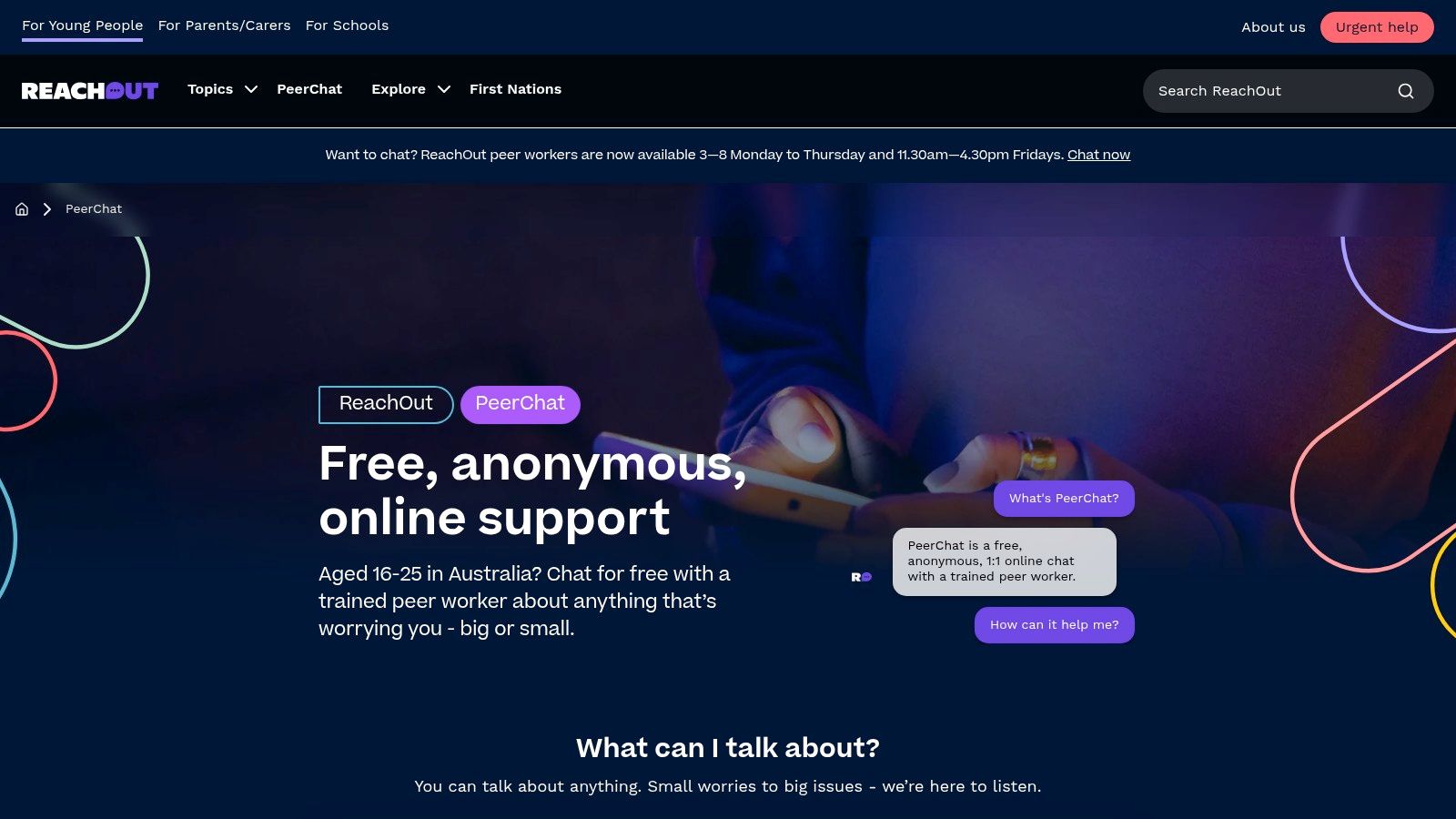
ReachOut PeerChat is built narrowly and well. It's a free one to one text chat for people aged 16 to 25 who live, study, or work in Australia. Trained peer workers with lived experience help you think through relationships, study or work stress, identity, and mental wellbeing.
Sessions run up to 45 minutes, long enough to get past the surface of a problem. You don't need an account or a professional referral, which removes two common reasons young people put off asking for help. ReachOut has also published an evaluation of the service, a good sign for a peer program.
The Verification Catch
A mobile number is required for verification, so this isn't identity free in the way an ephemeral room is. That's a safeguarding choice, but you should make it knowingly. The service also runs during set hours and you may sit in a queue at busy times.
- Best for: Young people in Australia who want a trained peer, not a random stranger.
- Not suited to: Anyone outside the age range or country, or anyone unwilling to share a phone number.
9. The Mix
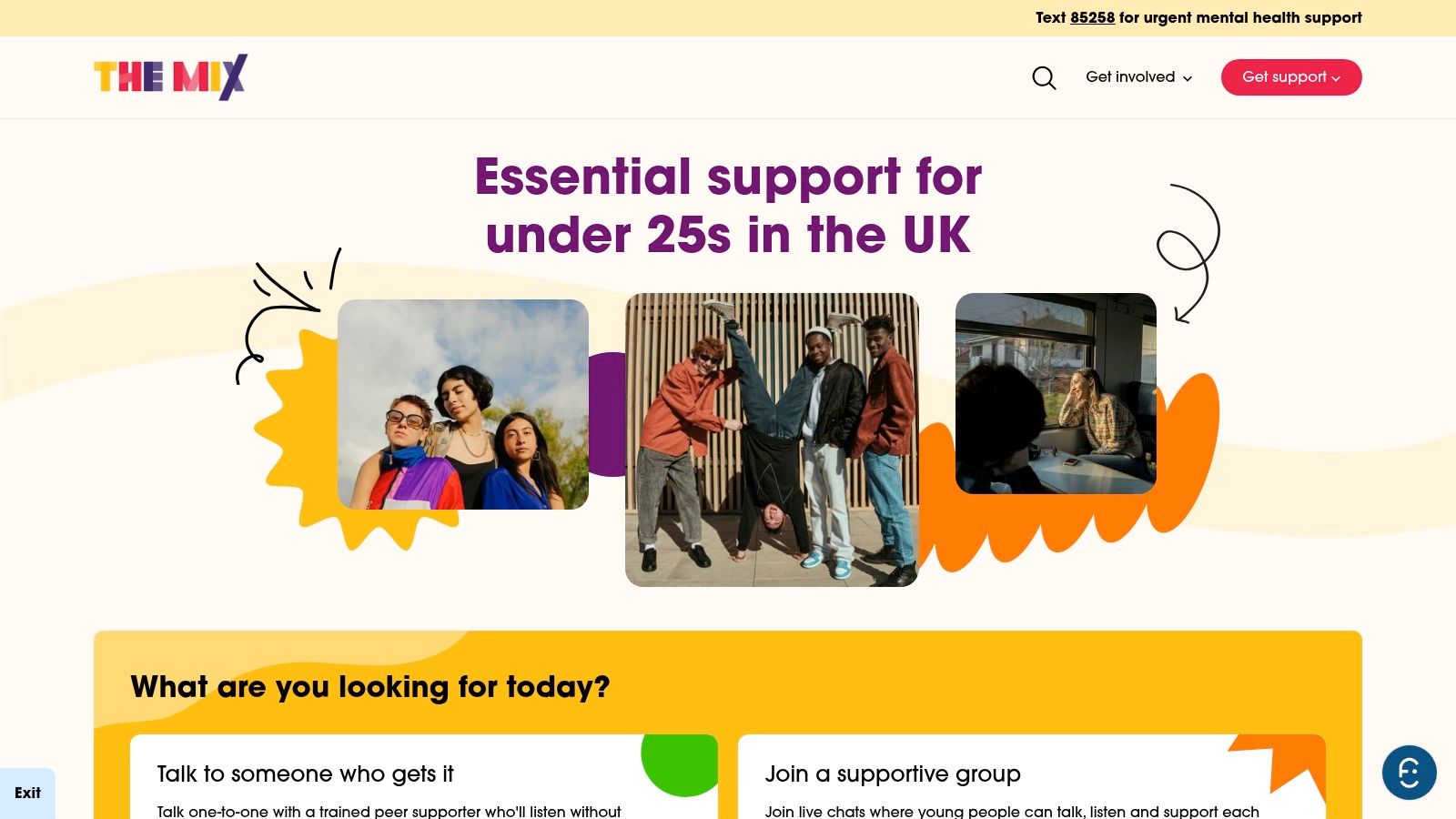
The Mix gives UK young people two distinct routes. Its anonymous, moderated discussion boards suit community advice seeking, while scheduled one to one PeerChat sessions offer a more personal conversation. Topics span relationships, stress, loneliness, identity, and work or study, with counselling and urgent text support available through other parts of the service.
Start on the boards if you want to read how others handled something before describing your own situation. Boards are free and moderated, and you can take your time. Book PeerChat when you'd rather talk privately with a trained young peer supporter for a free 45 minute session.
PeerChat is limited to ages 16 to 25 in the UK and requires booking with personal details, including contact information. So the boards and PeerChat sit in different threat models, and you shouldn't assume one inherits the other's anonymity. The Mix also isn't a crisis service or a substitute for counselling.
- Choose the boards for: Low pressure, community perspective at your own pace.
- Choose PeerChat for: A focused private conversation, if sharing contact details is acceptable.
10. WithYou
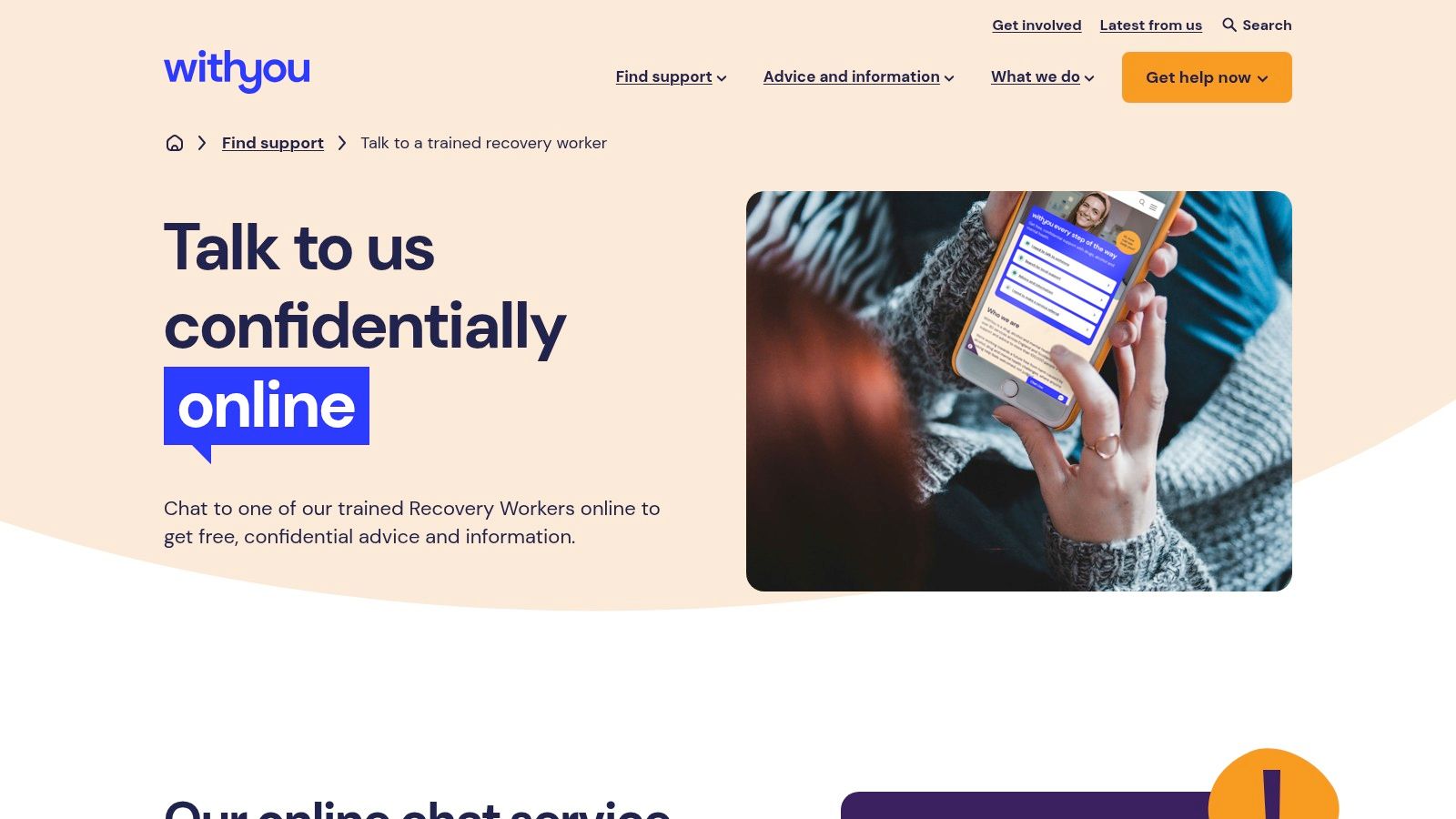
When the question is specifically about drugs or alcohol, a specialist beats a generalist every time. WithYou offers free live webchat with trained recovery workers about substance use and related mental health concerns. Giving your name is optional.
Workers can provide information and realistic next steps, whether you're worried about your own use or someone else's. That second group is well served here. Friends and family members often don't know where to ask basic questions without feeling they're betraying someone, and a nameless chat lowers that barrier. The service runs seven days a week during listed hours.
Know Its Boundaries
WithYou is UK focused and specializes in substance use, so it isn't the place for general life advice. Chats may queue or be temporarily unavailable when capacity is full, which can be frustrating if you've finally worked up the nerve to ask.
- Best for: Honest, informed first conversations about drugs, alcohol, and supporting someone else.
- Backup plan: If the queue is full, note the hours and return, or use its wider resources meanwhile.
Anonymous Chat Options for Advice at a Glance
| Identity required | Encryption / privacy model | Availability | Best for |
|---|---|---|---|
| No account, phone number, or email; access key shared separately | Browser-side AES-256-GCM; relay stores ciphertext, not decryption keys | Free; browser-based channels expire after 60 minutes | Recommended for identity-free, encrypted, one-time conversations |
| Account needed for some community features | Encryption details not specified; some features require an account | Free, on-demand listener chats; forums and group chats | Talking through personal concerns with volunteer listeners |
| No account for basic chats; optional account for friends and direct messages | Messages may be temporarily retained for moderation; encryption details not specified | Guest text or voice chats; availability details not specified | Quick, casual conversations with strangers |
| Email account required; anonymous posting is available | Encryption details not specified | Free community posts, private messages, and group chats | Peer support and community discussion |
| Registration required; anonymous member name | Personal information is processed; encryption details not specified | Access often depends on location or an institutional partnership; professionally moderated around the clock | Structured, professionally moderated peer support |
| Choose an anonymous name; no other identity requirement specified | Privacy details not specified | Free live chat during published hours | One-to-one support from trained peer supporters |
| No real name required | Anonymous contacts do not have a long-term case file; encryption details not specified | Free webchat in Australia, daily 3–9 p.m.; sessions about 25 minutes | LGBTIQA+SB peer support and referrals in Australia |
| Mobile number required for verification | Encryption details not specified | Free chat for ages 16–25 in Australia, during set hours | Young people seeking trained peer support |
| PeerChat requires booking and personal contact details; boards are anonymous | Moderated boards; encryption details not specified | UK discussion boards and scheduled PeerChat sessions | Young people seeking moderated discussion or peer chat |
| Name is optional | Encryption details not specified | Free UK webchat, seven days a week during listed hours | Support from trained recovery workers for drug or alcohol concerns |
Choosing by Threat Model, Not by Popularity
Start by naming who you're protecting yourself from. That one answer eliminates most of this list. If the risk is an employer, insurer, family member, or anyone linking the conversation to your identity at all, you need identity free access, not a pseudonym. If the risk is bad advice or a conversation that makes things worse, you need trained humans and moderation, even if that means registration.
Demand for that first category isn't niche. In a 2013 survey of 1,002 U.S. adults, the Pew Research Center survey on anonymity online found 59% of internet users said people should be able to use the internet completely anonymously, while 86% had taken at least one action to hide or mask their online behavior. The same survey found 59% of internet users said complete anonymity was not possible. Hold both facts at once. Use anonymous tools, but don't believe any tool makes you untouchable.
For first contact where no identity exchange is acceptable, an ephemeral encrypted room fits best. Initialize a channel, share the link and access key out of band over a trusted medium, talk, then let it expire or burn it. For wellbeing advice, pick the moderated and specialized services above. Anonymity helps people open up, since in a UK study of 504 users across three online mental health forums, the UK online mental health forums study found 59.3% agreed or strongly agreed anonymity made them feel safe enough to post. But feeling safe isn't the same as getting good advice, because in an analysis of 3,550 responses on a Polish internet health forum, the peer reviewed analysis of anonymous forum responses classified only 35.4% as rational and 4.4% as harmful.
That gap is why safeguarding can't be an afterthought. Stronger anonymity makes disclosure easier and intervention harder, a tension the JMIR Mental Health study of UK forums captures in finding 22.4% agreed and 3.4% strongly agreed reading mental health posts could make them feel worse. Anonymous chat can't substitute for emergency services or clinical care, and nobody in an identity free room can send help to an address they don't have.
Run through this checklist before any sensitive conversation. It takes two minutes and prevents most avoidable mistakes.
- Strip identifying details: Change names, places, employers, and dates that aren't essential to the advice you need, and never reuse a username from elsewhere.
- Verify before you share: Confirm the access key or the person on the other end through a separate channel before sending anything sensitive.
- Assume retention differs: Every service handles moderation access, backups, and message retention differently, and any recipient can screenshot or photograph your words regardless of encryption.
- Know your exit: Decide in advance what you'll do if the conversation turns harmful, and keep local emergency and crisis numbers separate from the chat.
The broader habit matters too. According to Ireland's Central Statistics Office household internet security release, 70% of Irish internet users restricted access to their geographical location when online in 2025, up from 61% in 2023. Privacy hygiene is becoming ordinary behavior, not paranoia. Treat anonymous chat the same way, as one deliberate layer matched to a specific risk. Newer habits deserve the same scrutiny, since a 2025 study of conversational AI privacy attitudes reported 19.2% of US adolescents and young adults used AI chatbots for mental health advice in 2025 and 63.3% of users had told nobody about that use. Secrecy isn't the same as privacy. Pick the tool whose limits you understand, share the minimum that gets you a useful answer, and verify anything important with a qualified professional.
If you need advice without exchanging names, phone numbers, or accounts, Ciphar lets you create a one time encrypted channel in your browser, share the link and access key separately, and talk for up to 60 minutes before it self destructs. It's built for exactly that first sensitive conversation, with nothing to install and no history left behind. Initialize a channel when you're ready and keep the key on a trusted channel of its own.