Why do five replies to a Reddit thread asking for an anonymous chat app name five different tools? Someone needs to talk to a source, a client, or a patient without handing over a phone number, and each recommendation answers a different version of that request. Nobody explains why the options aren't interchangeable, and at least one of them demands the exact identifier the poster was trying to avoid.
"Anonymous" is doing four different jobs in those threads at once.
Reddit itself shows how slippery the word is. A 2018 peer-reviewed study of Reddit's "veil of anonymity" found that creating an account requires nothing but a username, a feature the authors say most mainstream networks don't offer, and then qualifies that immediately: the result is pseudonymity, because posts, comments, and activity patterns accumulate into a recognizable person. Those threads still carry real weight, since nearly 80% of regular Reddit users said they obtained news on the platform, per Wikipedia's account of Reddit's growth.
Here are the ten options that come up most often, each judged on four questions. What identity does it demand? Is the encryption client-side and documented? What survives the conversation, and for how long? Does the anonymity claim hold up against an honest threat model? Learn the four and you can judge any app a thread hands you, long after today's recommendations age out.
1. Ciphar
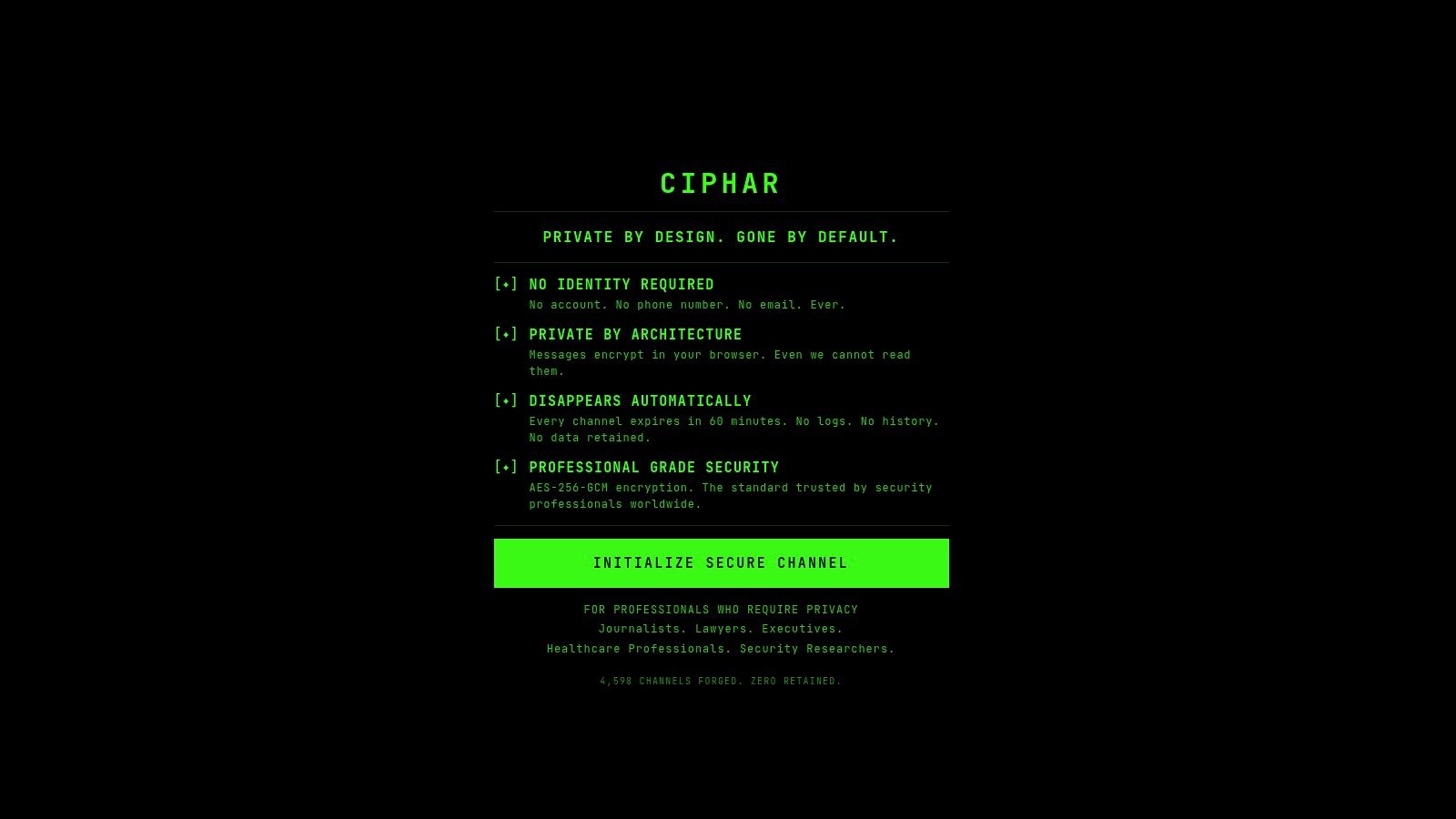
Reach for this one when the conversation has a deadline and the other person won't install anything. No account, no phone number, no email, no download. You create a channel in the browser, share the link and an access key over a separate trusted channel, and the recipient opens the link and pastes the key. A wrong key doesn't pass unnoticed. The channel posts a visible notice and the attempt gets rate-limited.
The four questions, answered without hedging
Identity. None collected. The browser generates the channel URL and a random access key locally on the device, and the key stays there unless you choose to send it.
Encryption. Messages, files, replies, edits, and voice frames are encrypted with AES-256-GCM in the browser before they touch the network. The AES key derives from the access key and a per-channel salt using PBKDF2 at 100,000 SHA-256 iterations. Files upload as ciphertext, and the optional voice room relays audio end-to-end over a WebSocket keyed off the channel secret. The server holds only ciphertext, initialization vectors, auth tags, salt, and expiry timestamps, and holds no key to any of it.
Retention. Sixty minutes, enforced server-side, with no archive, no extension, and no premium exception. A burn button wipes a channel immediately, without confirmation and without undo.
The anonymity claim. Narrow, and therefore credible. It's a one-time channel for first contact with someone you don't want to hand a phone number to: a source, an anonymous tipster, a one-off contact. Two honest limits come with that. The relay can see the channel name and the timing of activity, and the operator can rate-limit traffic, block abusive IPs, or terminate a channel that violates the terms.
Ciphar's public counter tracks channels forged in total, and no per-channel history is kept.
The trade-off to accept up front: lose the access key or let the clock run out and there is nothing to recover. That's the privacy guarantee and the operational risk in the same sentence.
2. SimpleX Chat
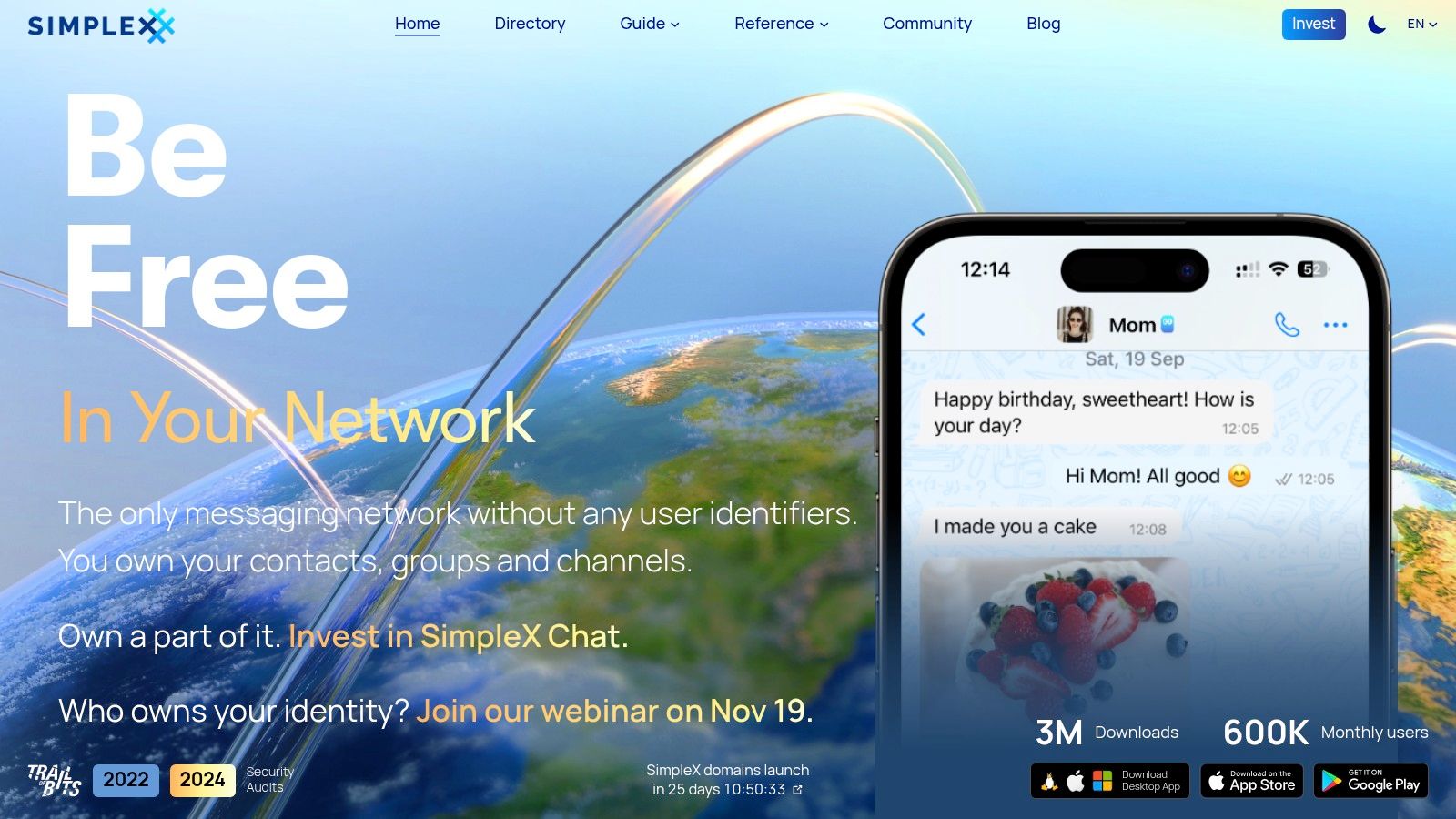
SimpleX removes the identifier instead of hiding it. You don't supply a phone number, an email address, or a user ID; you connect through an invitation link or a QR code, and the address exists for that connection rather than for you. Both people need the app installed and a minute of onboarding before either can type.
What it's good for
Ongoing private conversation with someone you'll talk to again. It handles private and group messaging, voice calls, and video calls across mobile and desktop. The code is open source, and you can run your own servers if you'd rather not depend on the project's infrastructure.
Where it stops
- No timed destruction. Nothing burns a conversation after an hour. Deletion is a decision you make, not a property of the room.
- Install first. A source who won't download an app can't be reached this way, and desktop use means linking a device rather than opening a page.
- The connection is the identity. An invitation link is a durable address, so the relationship persists even though no username does.
For a first contact with someone you'll never speak to again, the setup cost lands on the wrong person.
3. Session
Session takes the signup problem seriously and leaves the identifier problem in place. You create an account without a phone number or email, and you get an account ID. That ID is how people reach you, and it stays the same for as long as the account exists.
That's a genuine improvement over a phone number, and it isn't the same as anonymity. A peer-reviewed study of 546 Reddit users lays out the mechanism: registration needs only a username, but usernames persist, and posts, comments, karma, collected IP addresses, and aggregated profile history progressively expose the person behind one. A permanent account ID plays exactly that role on any platform.
The practical strengths
- No phone, no email, no SIM. Account creation never touches a carrier record.
- Encrypted by default. End-to-end encrypted messages with disappearing-message options.
- Decentralized routing. Messages travel across a network of nodes rather than one company's servers, and the code is open source.
- Groups and communities. Mobile and desktop apps, enough to carry a whole working relationship.
If the phone-number requirement is your main filter, this comparison of secret chat apps without a phone number goes deeper on how the signup flows differ between them.
The honest read: Session is a good pseudonymous messenger. It isn't a channel that disappears, and the ID you hand out is the thread that ties your conversations together over time.
4. Briar
Say a reporter needs to reach a source in a city where mobile data has been throttled or shut off for three days. That's the scenario Briar was designed for, and it's why it keeps appearing in threads that have nothing to do with convenience.
How it moves messages
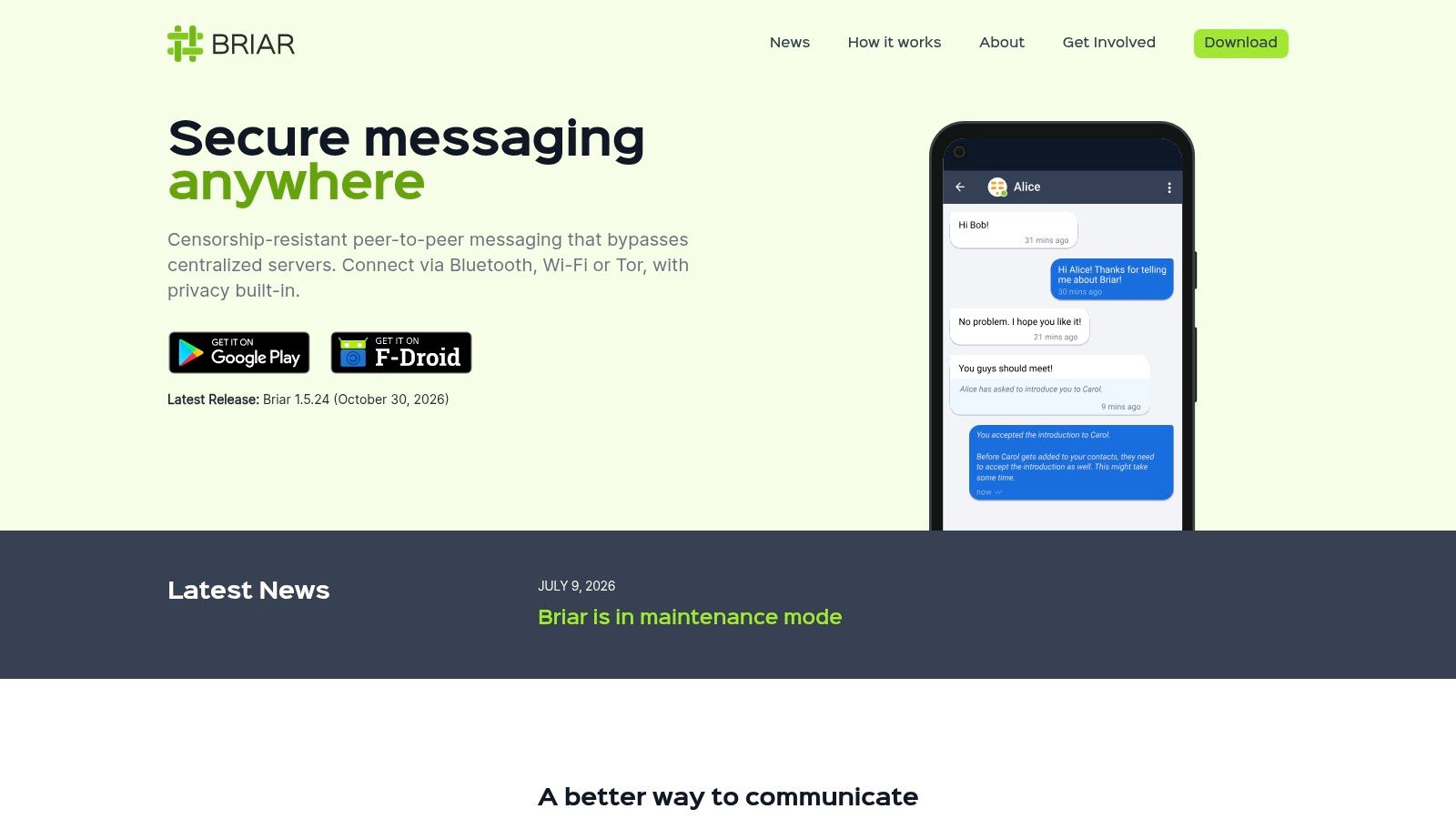
There's no central messaging server. With internet access it routes through Tor; without it, the two devices sync directly over Bluetooth or Wi-Fi when they're near each other. Beyond one-to-one messages it carries forums and blogs, so a small group can keep publishing while the network is unreliable.
The costs of that resilience
- Android-first availability. That narrows who can use it, especially on the deskbound side of a newsroom.
- Setup asks more of both people. Adding a contact and working offline isn't as forgiving as a mainstream messenger.
- Maintenance mode. The project is focused on essential security updates and bug fixes rather than new features.
Where it earns its place: on the day the network is the thing being controlled, resilience matters more than polish.
5. Jami
The contrast that matters here is peer-to-peer versus relayed. Jami doesn't need a central server to move a conversation between two people, the connection is direct, and creating an identity doesn't require personal details. That single design choice changes who can watch the traffic and who can switch the service off.
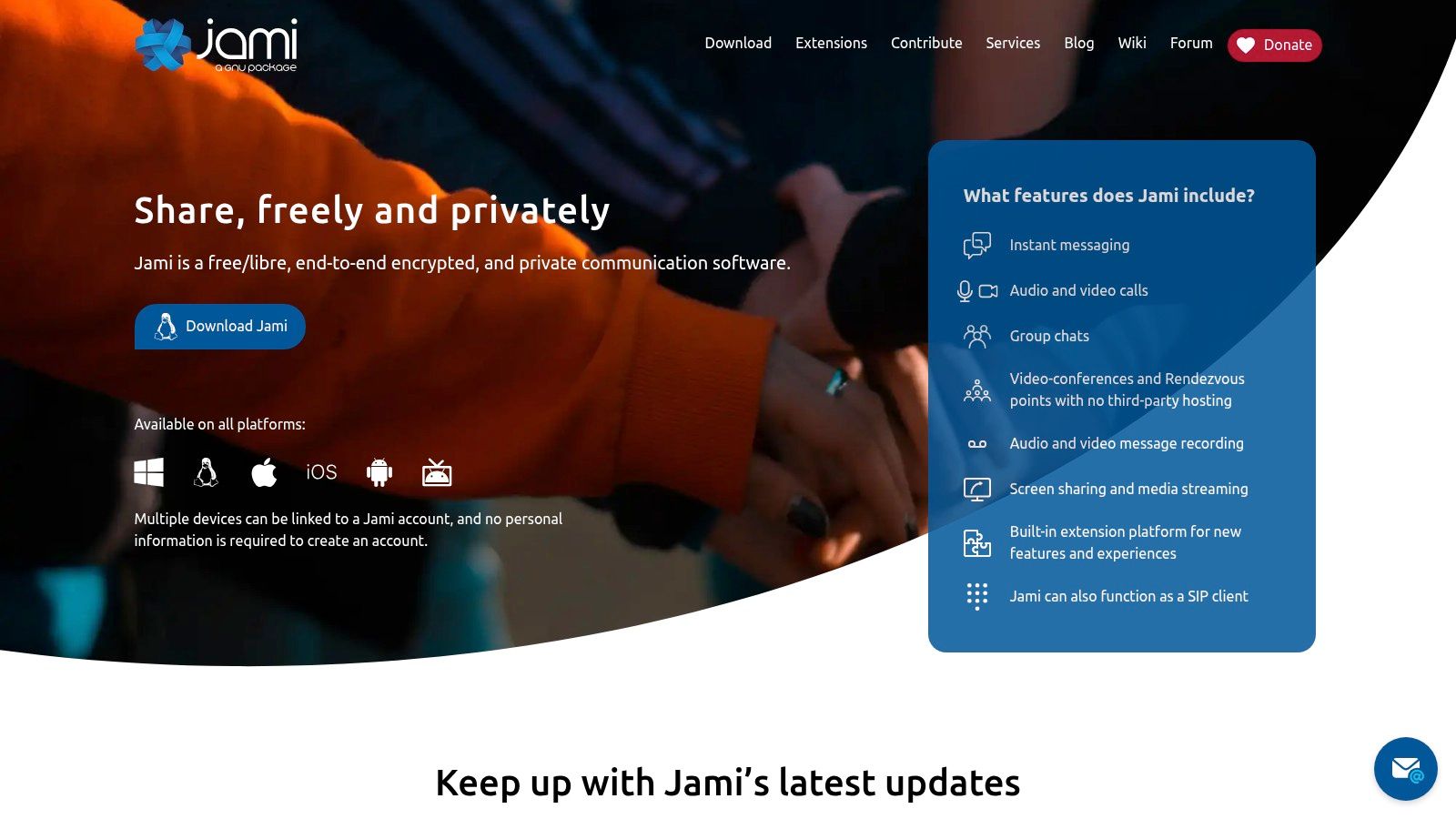
It's also the least temporary item on this list. Jami is a full communications client: messaging, group chats, calls, video conferencing, file sharing, screen sharing, on desktop and mobile, with support for local-network communication when there's no internet at all.
Where peer-to-peer helps
- No central relay. No single server sits in the middle holding everyone's conversations.
- No personal details at signup. You can hold an identity without handing over contact information.
- Free software. No ads and no paid tier steering the product roadmap.
Where it hurts
- Both people install it. There's no browser path for the contact who won't commit.
- Direct connections are less predictable. Restrictive networks and NAT setups can make peer-to-peer links fussier than a relay.
- Nothing is ephemeral. Jami is built to keep a conversation going, not to erase it.
6. Threema
Paying for a messenger is the least popular form of privacy advice and one of the more effective ones on this list. Threema charges for the app and takes no phone number or email at signup, so the account isn't anchored to a carrier record. The license carries no recurring cost after purchase, according to the company, though pricing varies by store and country.

The four questions applied
Identity. No phone number or email required at registration. Encryption. End-to-end encrypted messages and calls, with groups and file sharing. Retention. Yours to manage, with no fixed expiry and no automatic destruction. Anonymity claim. Modest and accurate.
What that means in practice
Threema is the right answer when you need to keep talking to the same person for months and neither of you wants an account tied to a phone number. It's the wrong answer for a single sensitive exchange with someone you'll never message again, because the identity stays and so does the history. Everyone involved needs the app, which is a bigger ask than it sounds when the other party is a source or a client. Desktop and web access extend the same identity rather than creating a throwaway one.
7. Signal
Signal is the most recommended app in these threads and the least anonymous of the ten. Signup requires a phone number. That single requirement settles most of the argument: if your threat model includes keeping a carrier record out of the conversation, Signal fails at step one, and no setting fixes it.
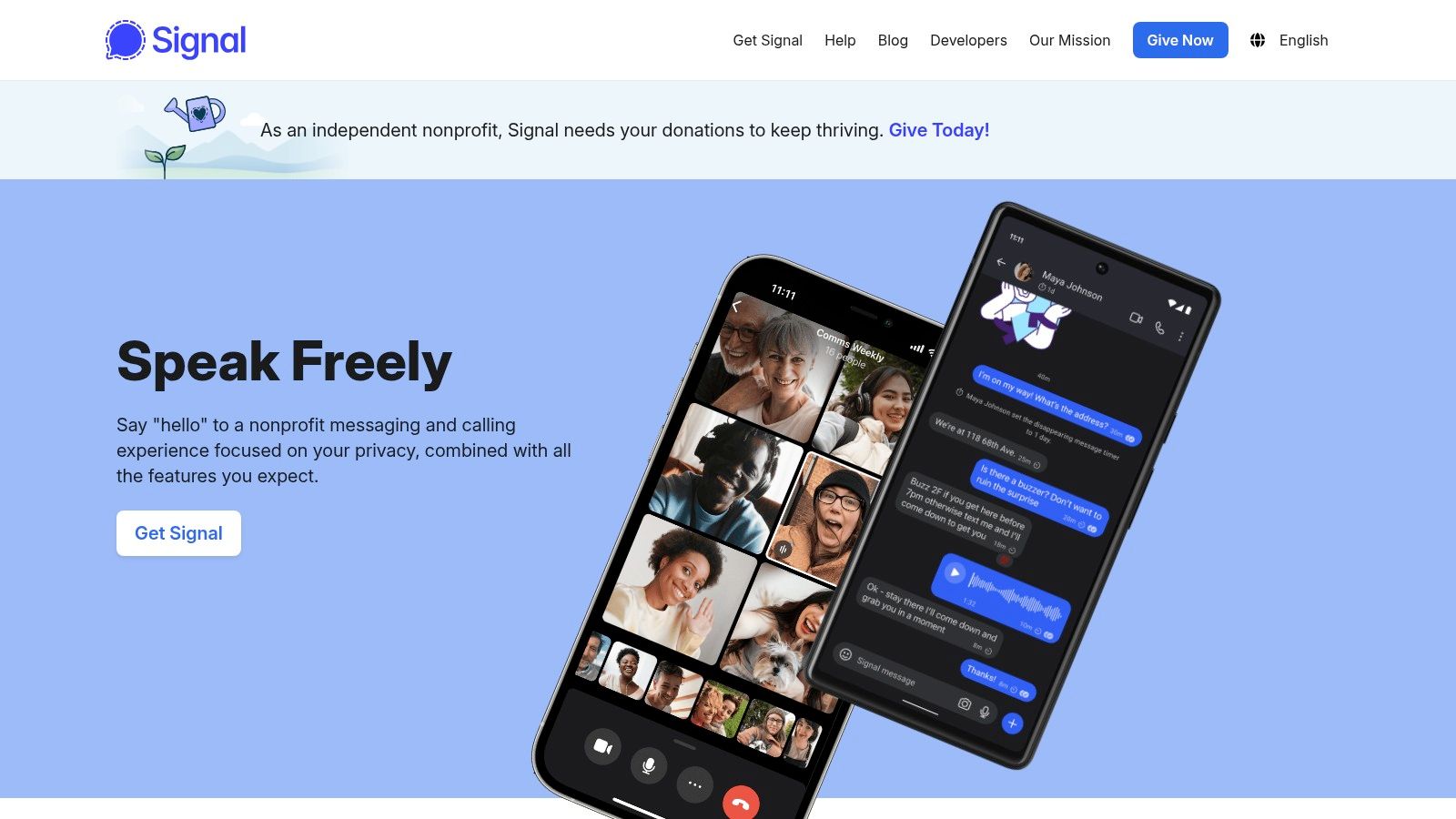
Optional usernames and phone-number privacy settings do soften the edges. You can start a chat without showing your number to the other person, and you can limit whether people find you by number at all. What those settings don't do is remove the registration requirement.
Where Signal is still the right call
- Both parties already have it. Familiarity is worth a lot when the alternative is a download and a setup conversation.
- Calls and groups work properly. End-to-end encrypted messaging and calls on mobile and desktop.
- The defaults are hard to get wrong. Encryption isn't optional and there's no configuration to weaken it.
"Anonymous" in a Reddit thread usually means "I didn't have to give my real name to the person I'm talking to." Signal can do that. It can't make you anonymous to the service.
For a first contact where handing over a number is the exact thing you're avoiding, an app that requires one is a non-starter, however strong the encryption behind it.
8. txtBase
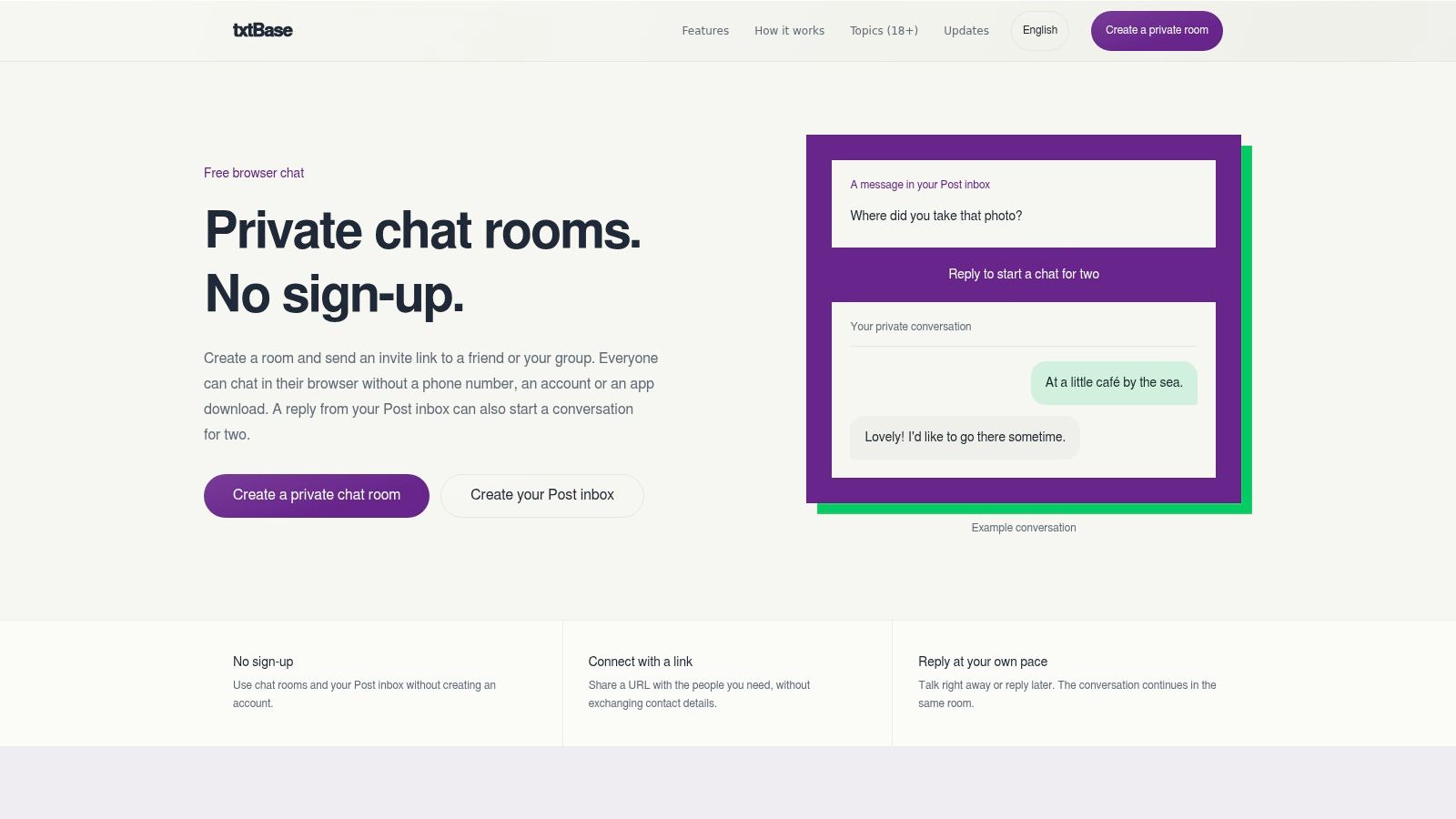
txtBase asks a narrower question than the rest: can two people talk in a browser tab for a fixed window and then have the room stop existing? Rooms are joined through invite links, no account or phone number is involved, and expiry can be set to one hour, 24 hours, or seven days.
What the expiry setting really is
Run it through the four checks and the shape is clear. Identity requirements are low: an invite link is enough, with no signup tied to a carrier or inbox. Retention is a timer on the room. It is not a guarantee about the data. The service says plainly that skipping signup doesn't make anyone untraceable, and it doesn't present itself as zero-knowledge encryption. Treat the link as the credential: anyone holding it may be able to walk in, and the working assumption should be that the operator can see what's typed.
Scale isn't the same as privacy
Reddit's transparency reporting shows very large volumes of private chat, most of which is never removed. A new browser chat inherits the demand and the moderation problem, not the tooling. For a short coordination call with someone who won't install anything, this is fine. For anything you'd regret hearing quoted, it isn't.
9. #1 Chat Avenue
Chat Avenue is a public room, and that's the whole point. Most rooms let you in as a guest with a nickname you choose, no registration required, and themed categories cover everything from general chat to support groups. Private messaging and some audio or video features exist in certain rooms, and optional registration provides paid VIP extras.
What it protects and what it doesn't
The nickname keeps your legal name off the screen. Nothing else is protected. Rooms are open, conversations are visible to whoever is in them, and moderators may not be present at every hour. Independent safety guidance notes that even on Reddit, direct messages receive less community moderation than public posts, which is why participants end up reporting problems themselves, as security.org's Reddit safety guide explains. An open room with light moderation is the same problem with more strangers in it.
- Right use: finding people to talk to about a topic, in the open, with nothing sensitive on the table.
- Wrong use: anything a client, patient, or source would not want repeated back to them.
- Watch for: VPN and proxy connections are usually blocked for non-VIP users, which catches anyone connecting through one.
For a structured look at how open rooms compare with private ones, this guide to anonymous chat rooms online covers the differences.
10. ChatIb
ChatIb is the lowest-friction item here. It's a browser chat where you can start with a randomly generated username and no email, phone number, or password, with a random-match option if you don't have a specific person in mind. It's for adults 18 and over, and it provides report and block controls.
The deletion claim, read carefully
The service says messages are deleted from its server after being read, while chat history remains in your browser, and that reported conversations may be retained for review. That's a retention policy with an exception built in, which is normal and worth understanding before you type anything.
The distinction that matters is the one Reddit threads keep collapsing: anonymous is not the same as confidential. As NordPass's assessment of Reddit safety sets out, Reddit chat is pseudonymous rather than anonymous, chats aren't end-to-end encrypted, and administrators may access content during investigations. There are four separate properties to check, identity anonymity, message confidentiality, metadata protection, and deletion guarantees, and a service can score well on one while failing the others.
Where it fits
Matching with strangers, low stakes, nothing you'd mind being reviewed later. It isn't a verified end-to-end encrypted channel, so it doesn't belong in a conversation where the content itself is the risk. If you want the whole browser-chat category explained end to end, this piece on browser chat apps walks through how the options differ.
Anonymous chat options compared
Read this table the way Reddit threads rarely do: column by column, not row by row. An app can win on identity and still lose on retention, and the "Best for" column only applies if the first three columns already fit your situation.
| Identity required | Encryption | Message retention | Install needed | Best for |
|---|---|---|---|---|
| Ciphar: No account or personal details; share a link and access key | Browser-side AES-256-GCM | Expires after 60 minutes; no archive or recovery | No | Recommended: one-time sensitive browser chats |
| SimpleX Chat: No phone, email, or permanent user ID | End-to-end encrypted | No automatic timed channel destruction | Yes | Ongoing private conversations without a persistent identifier |
| Session: No phone or email; uses an account ID | End-to-end encrypted | Disappearing-message options; no fixed channel expiry specified | Yes | Pseudonymous, ongoing messaging |
| Briar: No phone number or email; contacts added via link or in person | End-to-end encrypted | No central server storage; messages live on the participants' devices | Yes | Resilient communication during censorship or outages |
| Jami: No personal information required to create an account | End-to-end encrypted messages and calls | No central server storage; history stays on your devices | Yes | Peer-to-peer messaging, calls, and file sharing |
| Threema: No phone number or email required | End-to-end encrypted | No timed expiry; history persists on device until deleted | Yes | Ongoing secure conversations |
| Signal: Phone number required to register | End-to-end encrypted | Optional disappearing messages; no fixed channel expiry | Yes | Private conversations with people already using Signal |
| txtBase: No account or phone number required; join by invite link | Does not claim zero-knowledge encryption | Rooms expire after 1 hour, 24 hours, or 7 days | No | Quick browser chats with configurable room expiry |
| #1 Chat Avenue: Guest nickname; registration usually not required | Does not claim end-to-end encryption | Retention depends on room type and moderation | No | Open-ended social chat in public rooms |
| ChatIb: Random username; no email, phone, or password required | Not presented as end-to-end encrypted | Messages reportedly deleted after reading; browser history remains and reports may be retained | No | Casual stranger chats with low signup friction |
The split that matters is between tools built for ongoing relationships and tools built for single sessions. SimpleX, Session, Briar, Jami, Threema, and Signal all assume you will talk to the same people again, which is why they keep history on your devices and need an install. Among the browser options, Ciphar is the only one that pairs a fixed self-destruct on every channel with client-side encryption covering messages, files, and voice. Signal sits alone on identity: strong encryption, but registration anchors every account to a phone number.
How to Judge Any Anonymous Chat Recommendation Before You Trust It
Threads asking for an anonymous chat app Reddit users rate highly will keep multiplying, and the recommendations will keep changing. The four questions don't.
The checklist to run before you type
1. What identity does it demand? Not just at signup, but at contact. A service can skip the registration form and still require an account ID that everyone messages, which is an identity with extra steps. Ask what the other person needs in order to reach you, and whether that thing is permanent.
2. Is encryption client-side, and is it documented? "Encrypted" without a statement about where keys live tells you nothing. Look for documentation saying keys are generated on the device and the server holds ciphertext only. If the operator can't recover your messages, that's a feature; if they can, decide whether you trust their retention policy and their lawyers.
3. What is retained, and for how long? Include metadata, reports, backups, and anything a participant screenshots. A room that expires in an hour but archives for ninety days hasn't solved your problem. Retention should be a hard limit you can verify in the product's own language, not a promise in a marketing line.
4. Does the anonymity claim match your threat model? Anonymity to the other participant, anonymity to the service, and anonymity to a network observer are three different things. Most apps deliver one and advertise all three.
Two habits that matter more than the app choice
Share access keys out of band, in a channel you already trust: a phone call, a signal you've used before, a face-to-face meeting. Sending the link and the key in the same email hands a single interceptor the whole conversation. If you use a rented number to receive a verification code, treat it as convenience rather than cover; quackr's number rental options are useful for keeping a personal number out of a signup form, not for making you unidentifiable.
Then match the tool to the lifespan of the conversation. A single sensitive exchange with a source you'll never message again is a one-hour problem, and an expiring browser channel fits it better than any installed messenger. A working relationship that runs for months is the opposite case, and SimpleX or Session will serve it better than anything that self-destructs.
The uncomfortable part is that the most private option is often the least convenient one, and the most convenient is often the one that keeps everything. Decide which risk you're managing before you pick.
A one-off conversation with a source, a client, or a stranger who needs an answer today is exactly what Ciphar was built for: open a browser, create a channel, and share the link with its access key over a channel you already trust. Messages, files, replies, and voice frames are encrypted client-side with AES-256-GCM before they leave your device, the relay stores only ciphertext, and every channel expires 60 minutes after it's created with a burn button if you need it gone sooner. No account, no phone number, no install. Start a channel at Ciphar and test the four questions against it yourself.